
The body changes throughout the month. Hormones fluctuate, skin reacts, the stomach bloats, and breasts become sensitive. Yet, most women wear the same underwear on day three of their period as they do on day fourteen of their cycle, when everything is fine.
Understanding how the menstrual cycle influences the body and adapting underwear accordingly is one of the simplest ways to improve daily comfort, week after week.
What the Cycle Does to the Body
The menstrual cycle is divided into four phases: the menstrual phase (period), the follicular phase, ovulation, and the luteal phase. At each stage, estrogen and progesterone levels vary, with concrete effects on the body.
During menstruation, hormone levels drop, which can cause skin dehydration and greater skin sensitivity to friction and pressure. According to Typology, the decrease in collagen linked to hormonal fluctuations makes the skin more fragile and reactive during this period.
In the luteal phase, in the days leading up to menstruation, women may experience bloating, sensitive breasts, and increased emotional sensitivity. The belly is more swollen, the abdominal area more uncomfortable, and a too-tight elastic band can quickly become unbearable.
These changes mean that panties that are perfectly comfortable mid-cycle can become a source of irritation or unwanted pressure a few days later.
Phase by Phase: Which Underwear to Choose
During Menstruation: Softness and Coverage Above All
This is often the most demanding period. The stomach is sensitive, the skin reacts more to friction, and physical discomfort is at its peak for many women.
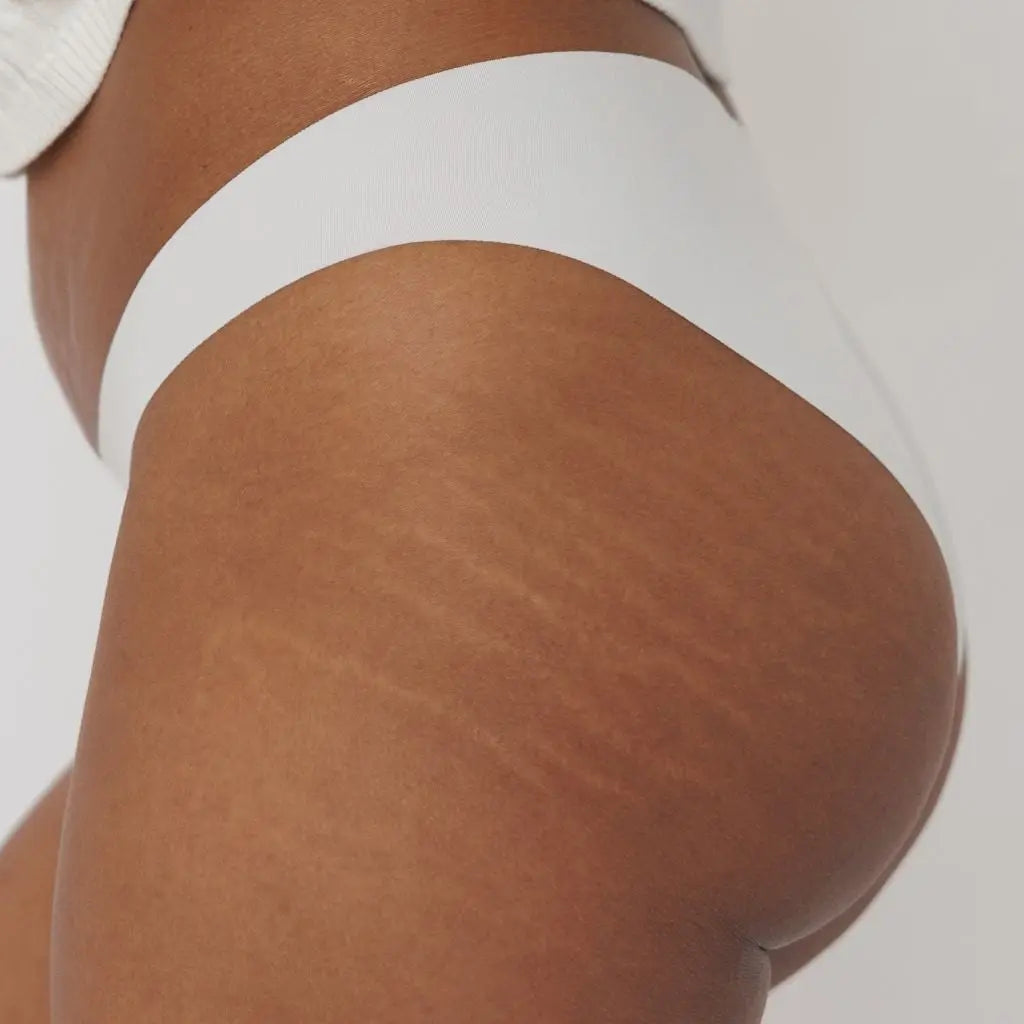
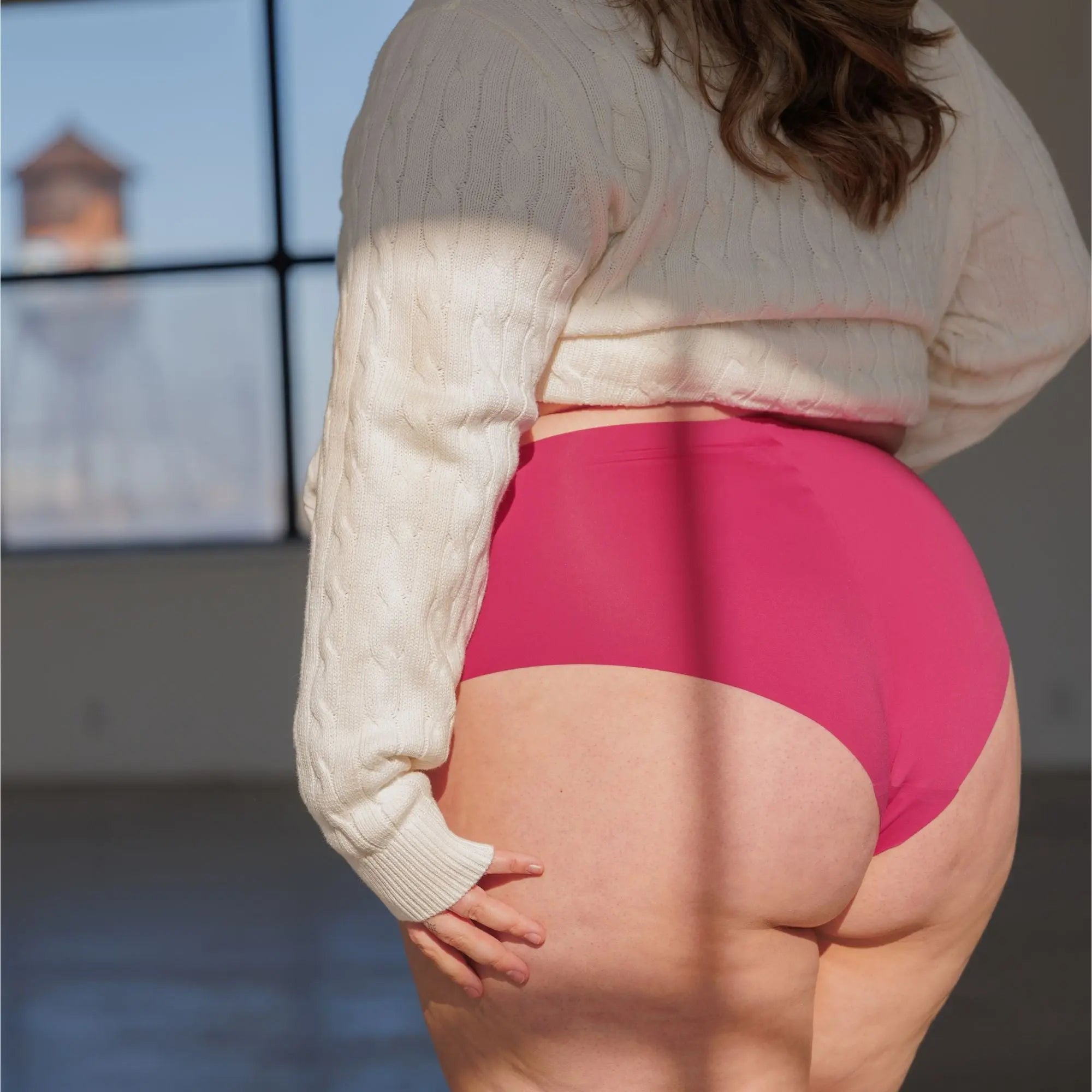
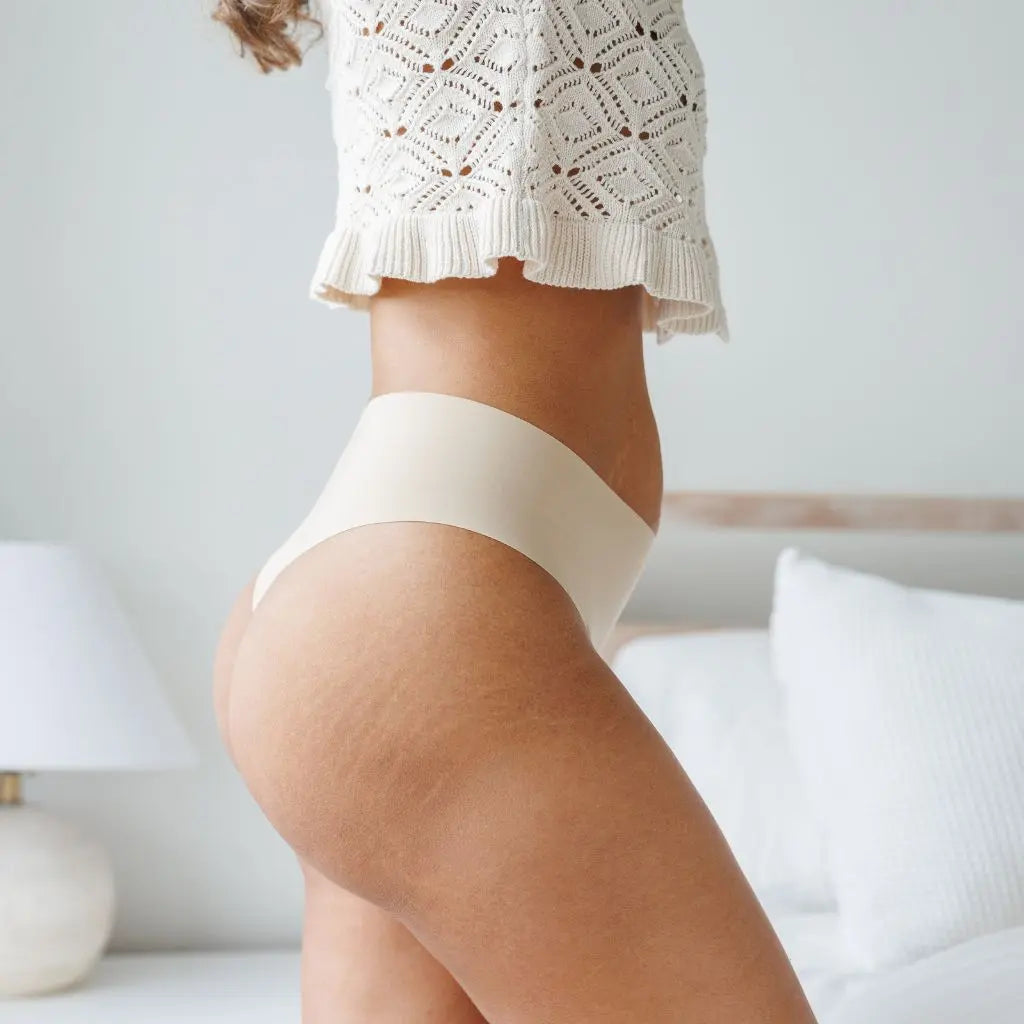
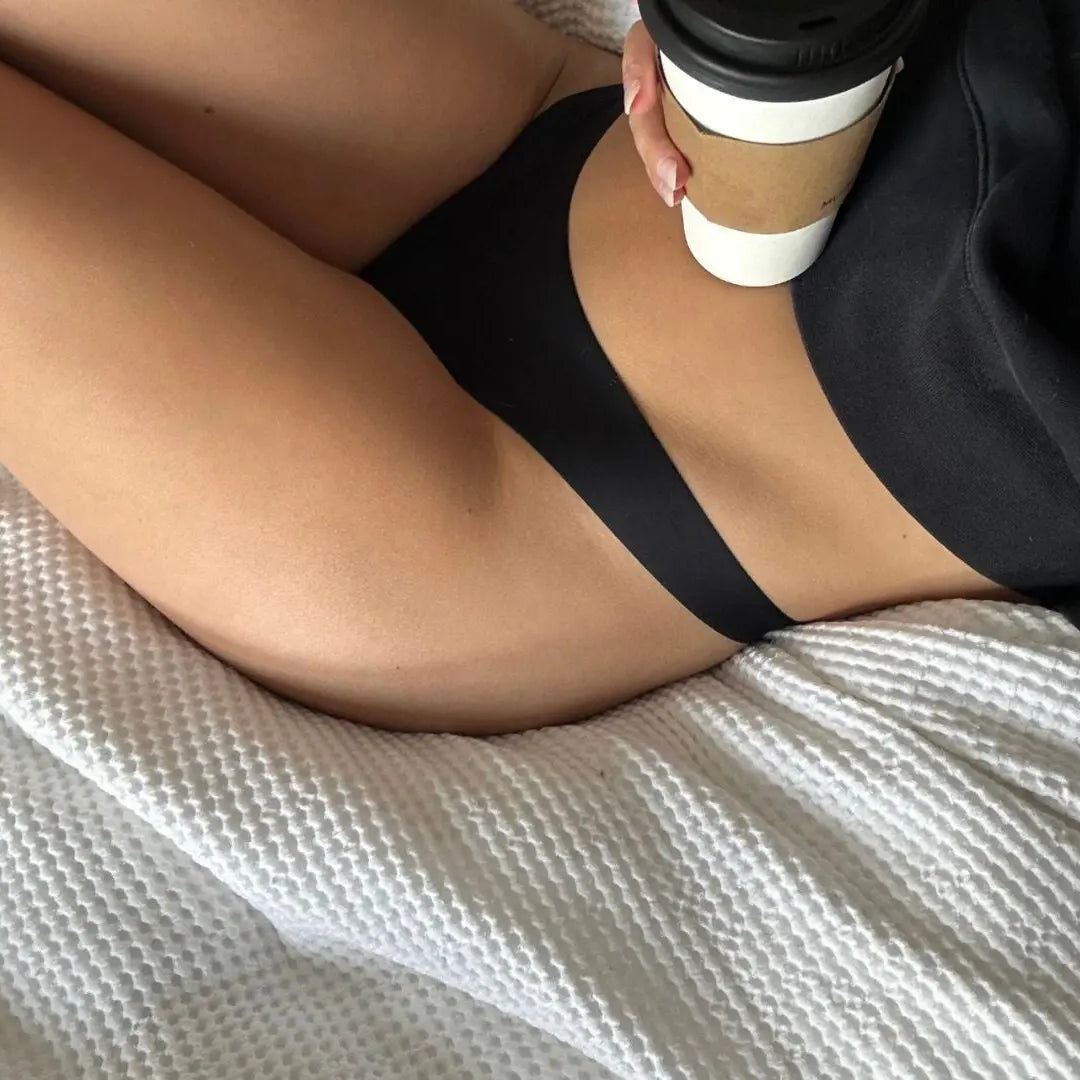
The seamless high-waisted thong offers gentle abdominal support that can help alleviate the feeling of pressure. The seamless bikini brief is also an excellent option for period days, thanks to its fuller cut and seamless edges that prevent friction on more reactive skin.
To avoid these days: overly rigid waistbands and cuts that are too tight on the stomach.
The material also plays a crucial role. Cotton remains the standard for the crotch, as it absorbs moisture and reduces the risk of irritation. According to the American College of Obstetricians and Gynecologists, wearing panties with a cotton crotch is an essential preventive measure, particularly important during menstruation. To learn more, consult our guide on the cotton gusset.
In the Follicular Phase: Back to Natural Comfort
After menstruation, estrogen gradually rises. Energy returns, skin is more supple, and the stomach is flat. This is often the period when one feels best in their body.
This is a good time to return to light and clean cuts, such as the seamless thong or the seamless Brazilian brief. The skin tolerates various materials better, and the second-skin feeling is more accessible.
Around Ovulation: Comfort and Freedom of Movement
Ovulation marks the peak energy of the cycle. Many women feel more active and comfortable in their bodies.
Light and invisible seamless panties under clothing accompany this period of movement and activity well. The important thing is to preserve this freedom without friction or constraint.
In the Luteal and Premenstrual Phase: Anticipating Discomfort
This is the phase that requires the most attention. The body begins to prepare for a new cycle, and premenstrual symptoms can set in: bloating, tender breasts, more reactive skin.
According to Aroma-Zone, some women notice variations in their sensory sensitivity throughout the cycle, often linked to hormones. Concretely, a seam that went unnoticed two weeks earlier can suddenly become perceptible and irritating.
During this phase, opting for models with a soft elastic waist, no raised seams, and a cut that does not constrict the abdominal area significantly improves daily life. The seamless high-waisted thong or the seamless bikini brief in stretchy, soft fabric will often be more comfortable than a too-tight cut.
The Role of Material According to Phases
Nylon and Elastane
Nylon and elastane, combined in seamless panties, offer optimal stretch and a second-skin feel. They adapt to changes in body shape during the cycle, especially abdominal bloating, without creating pressure points. Their lightness makes them discreet and comfortable throughout the day.
The Cotton Gusset
Cotton in the crotch remains essential regardless of the cycle phase. Breathable, absorbent, and soft, it promotes the balance of the intimate flora and limits the risk of irritation. To learn more about materials and their impact on comfort, consult our guide on materials for comfortable underwear.
Cut, Size, and Cycle Variations
One of the realities of the cycle is that the same size can fit differently from week to week. The stomach bloats slightly in the luteal phase, and panties that seemed perfect can exert undue pressure.
This is not a matter of permanent morphology. It is simply the body transforming to the rhythm of hormones. Having two or three slightly different models in one's drawer, including a softer cut for more difficult days, is a concrete way to adapt to these variations.
To choose the styles best suited to your body shape, consult our complete guide on seamless panty styles.
Intimate Hygiene and Menstrual Cycle
The menstrual cycle also influences vaginal flora and natural discharge throughout the month. In the ovulatory phase, discharge naturally increases. In the premenstrual phase, the balance can be more fragile.
This context makes the choice of a cotton gusset all the more relevant, even in nylon panties. Cotton in direct contact with the skin promotes intimate balance, absorbs moisture, and limits the risk of irritation. To delve deeper into this topic, consult our guide on underwear and intimate health.
Daily underwear changes remain, regardless of the cycle phase, the basis of good intimate hygiene.
Simple Habits to Adopt
Adapting your underwear to your menstrual cycle does not mean replacing everything. A few adjustments are enough.
Keep one or two more covering and soft models for period days and the premenstrual phase. Ensure the crotch is always cotton, especially during phases of greater sensitivity. Avoid rigid elastic bands when the skin is more reactive. Choose stretchy materials that follow slight changes in body shape without creating pressure points.
These simple, regularly applied actions make a tangible difference to daily comfort.
FAQ
Which panty cut to choose during your period? During your period, high-waisted thongs or seamless bikini briefs offer better abdominal support and reduce friction on more sensitive skin. Avoid overly rigid elastic bands and opt for soft, seamless materials.
Why do my panties feel tighter before my period? This is completely normal. In the luteal phase, hormonal fluctuations cause bloating and slight abdominal swelling. This is not a matter of permanent size, but a natural variation of the cycle. Stretchy, soft fabric panties help make these days more comfortable.
Do I need different underwear for each phase of the cycle? Not necessarily. The idea is not to have a distinct pair of panties for each week, but to have a few versatile models that adapt to the body's changing needs: one or two softer and more covering models for difficult days, and lighter, invisible models for the rest of the cycle.