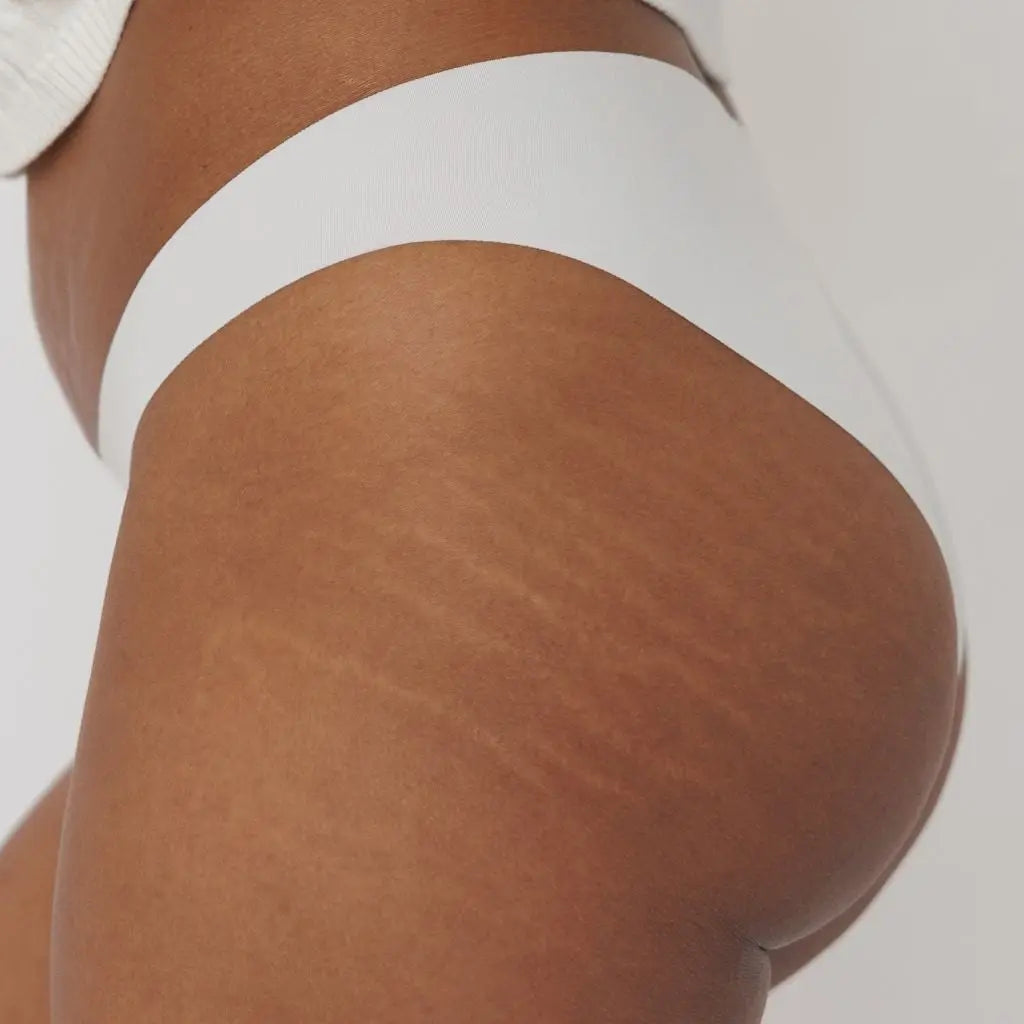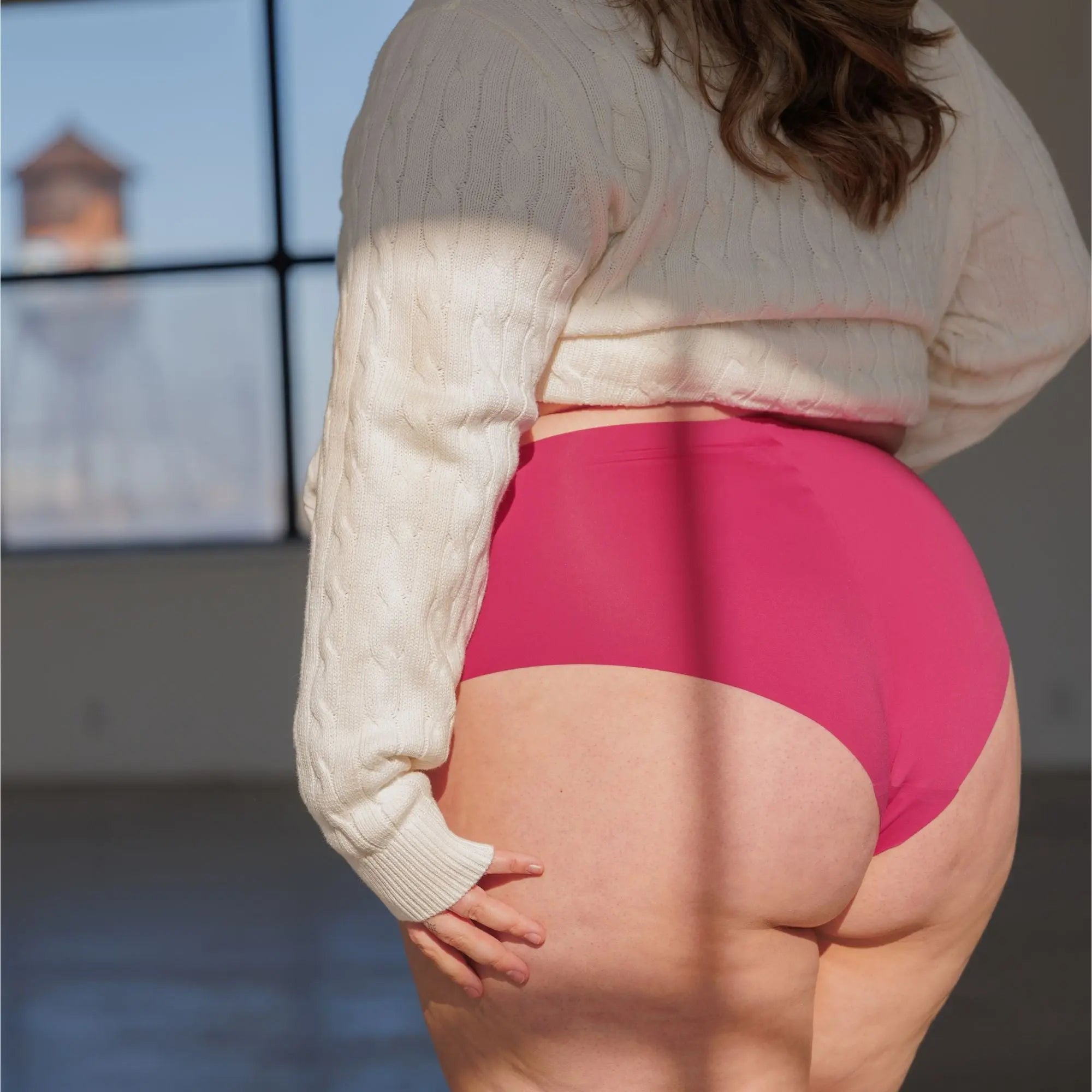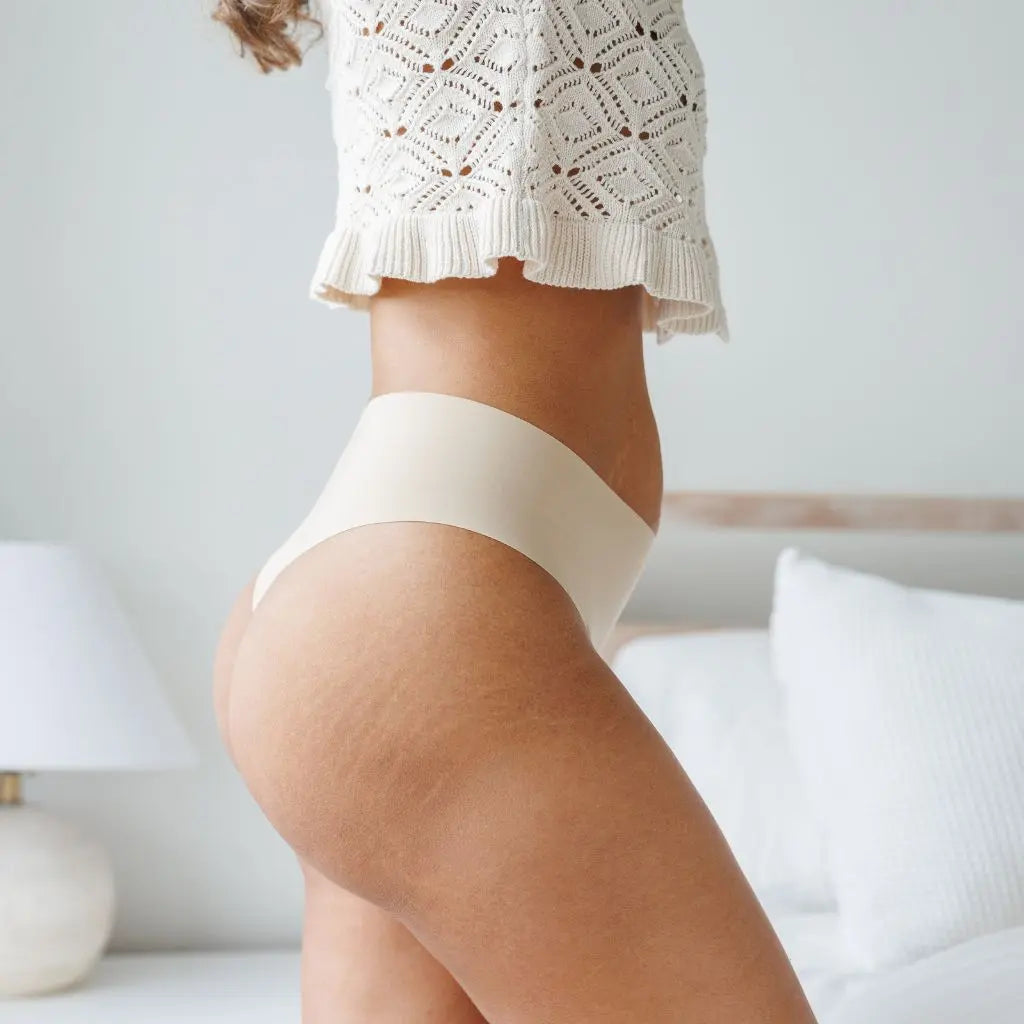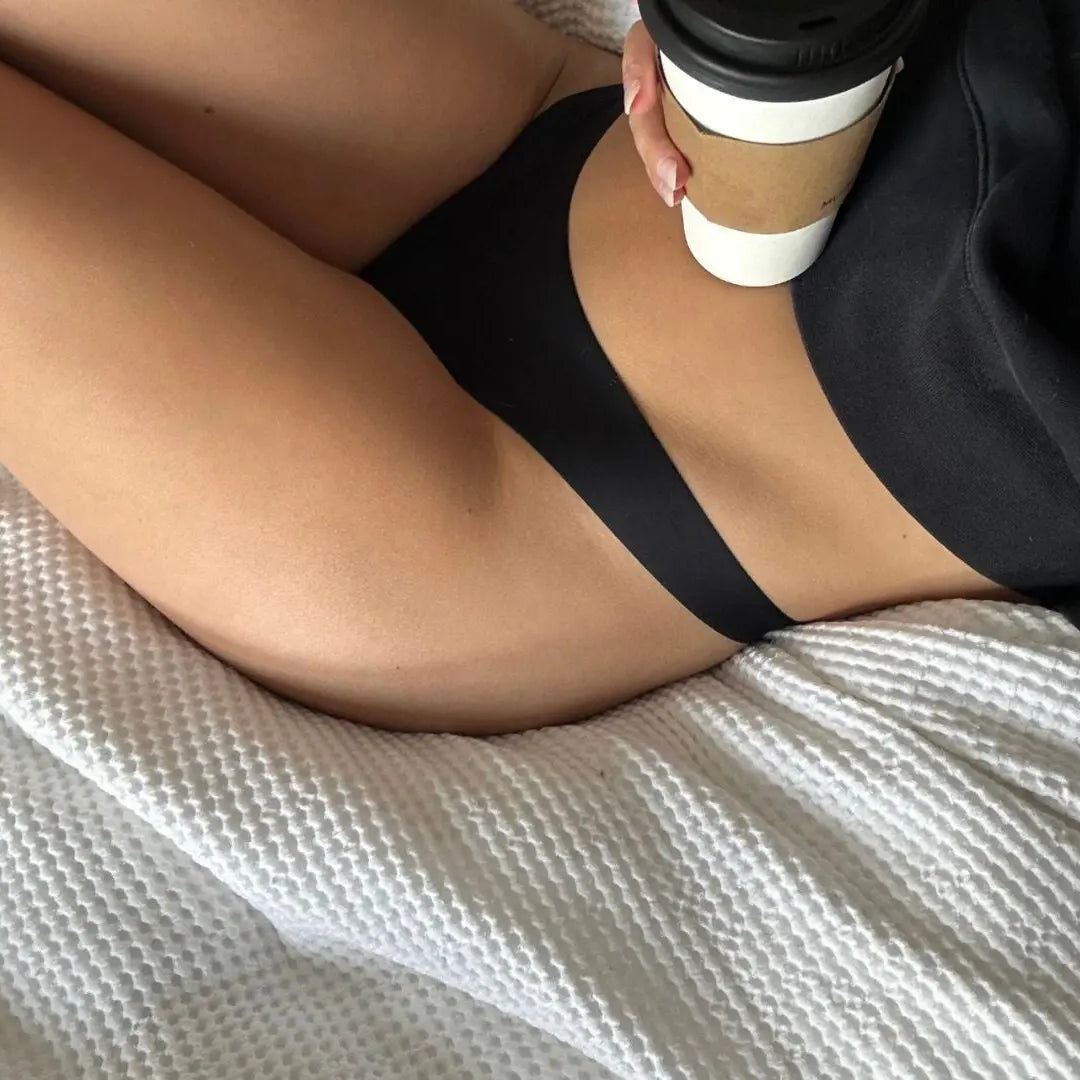

We've all experienced that slightly frustrating moment: a beautiful, well-chosen outfit, and then that visible line running across the hip or buttock, discreetly revealing the underwear beneath. It's not a matter of size or body type; it's a matter of underwear. The good news is that there are concrete solutions, and they are based on simple principles that most women don't truly know yet.
Why do panty lines appear?
Before trying to solve the problem, it's worth understanding why it happens. Panty lines are not caused by the panties themselves, but by the transition between the area covered by the fabric and bare skin. The more abrupt this transition, the more visible the line will be under a fitted garment.
There are three main factors at play:
The thickness and stiffness of the elastic
A thick or stiff elastic creates a noticeable relief, especially under thin fabrics like jersey, velvet, or lightweight synthetic materials. This effect is further accentuated if the elastic is sewn rather than integrated into the fabric itself.
The cut of the panties
A classic cut, with well-defined edges on the hips and bottom of the buttocks, will always leave a visible line under tight clothing. The shape of the panties determines the shape of the line. A high-waisted cut can create lines at the waist and hips simultaneously if it's not designed to disappear.
The material of the underwear compared to the clothing
When the panty material is thicker or more textured than the garment worn over it, the difference in volume becomes visible. This is why classic cotton panties, for example, show more under Lycra leggings than ultra-smooth microfiber panties.
The cut: the primary criterion to consider
Among all the factors that influence the visibility of panties under clothing, the cut is probably the most crucial. Here's what you need to know.
Seamless panties
Seamless panties are knitted in a single piece, without visible seams on the sides or edges. Therefore, there are no rigid transitions in these areas, which naturally makes them much less visible under clothing. This circular knitting technology has existed for several decades, but it has been considerably refined in recent years.
Thongs and G-strings
Thongs and G-strings were specifically designed to reduce visible lines on the hips. That said, comfort is not always guaranteed for all women. G-strings, in particular, can cause irritation or discomfort during prolonged physical activity. So, it's not automatically the best option if comfort is a priority.
Laser-cut panties
Laser-cut edges, without seams or rolled hems, allow for an ultra-flat finish that literally disappears under any garment. This is one of the most effective techniques for achieving truly invisible underwear. If you're looking for invisible everyday panties, this is the type of finish you should prioritize.
Materials that make a difference
The material of underwear has a direct influence on its visibility, comfort, and durability. This is not a secondary detail.
Microfiber
Microfiber is an extremely fine synthetic fiber, usually composed of polyester or nylon, which produces a smooth, light, and thin fabric. It is one of the most effective materials for invisible underwear because it conforms to the body without creating bulk. It is also easy to care for and dries quickly.
Its only drawback: it breathes less well than natural materials. For active days or women whose skin is sensitive to heat, panties with a cotton gusset are still recommended, even if the rest is microfiber.
Stretch nylon
Stretch nylon, often blended with elastane, is particularly popular for sports underwear or panties worn under leggings. It offers excellent freedom of movement, is practically invisible, and withstands repeated washing well. Textile dermatology research shows that smooth synthetic fibers generate less skin friction than natural fibers with irregular surfaces, making them a relevant choice for sensitive skin under clothing.
Modal and bamboo
These two natural materials are renowned for their softness and fluidity. Modal, derived from beech wood, is particularly appreciated for its almost silky texture and cool feel. Bamboo, on the other hand, is naturally antibacterial and thermoregulating. Both materials offer a good compromise between comfort, breathability, and discretion under clothing.
What underwear to wear under fitted clothing?
The answer depends on the type of garment. Here are some everyday situations with practical recommendations.
Under leggings or sports pants
This is probably the situation where panty lines are most visible. Under Lycra leggings, everything shows. The best option is seamless, high-waisted or mid-rise panties, made of microfiber or stretch nylon, with laser-cut edges. The high-waisted cut has the additional advantage of discreetly holding in the tummy and avoiding the "double roll" at the waistband of the leggings.
Under a fitted dress or skirt
Under a tight-fitting dress, seamless microfiber panties with minimal volume in the back are ideal. If the dress is made of light or transparent fabric, you should also pay attention to the color: nude underwear (in a shade close to your skin color) will always be less visible than white underwear, which can paradoxically show through certain light fabrics.
Under thin fabric pants or tailored trousers
For professional outfits, microfiber panties with a semi-covering or full-coverage cut, with laser-cut edges, give excellent results. You should absolutely avoid cotton panties with sewn-on elastic, which are most likely to create visible lines.
Underwear color: an often overlooked detail
There is a widespread misconception that you should always wear white or nude underwear under light-colored clothing. This is not entirely accurate.
In reality, what matters is the contrast between the shade of the panties and the shade of your skin. Underwear that is as close as possible to your skin tone will be the least visible, regardless of the color of the clothing. This is why serious brands offer several nude shades adapted to different skin tones, and not just a single "universal beige."
For dark clothing, the rule is more flexible: any color of underwear that doesn't show through and isn't too bulky will be acceptable.
What underwear design tells you about its quality
When choosing underwear, it's useful to know how to read a few quality indicators. Well-designed invisible underwear generally has the following characteristics:
The edges are either laser-cut or integrated into the knitting (seamless), without traditional side seams. The fabric is smooth on both sides, without raised texture. Elastane is present in sufficient quantity so that the panties adapt to the body without compressing it. The cut is designed to cover what it needs to cover without creating folds or excess fabric. The elastic bands at the waist and legs are flat, flexible, and integrated into the fabric rather than simply sewn on top.
It is this design philosophy that guides LICA Wear's work: to create essentials so well designed and so comfortable that you completely forget you're wearing them. To learn more about this topic, our complete guide to invisible underwear details all the criteria to consider when choosing.
Care of invisible underwear
Quality underwear deserves proper care. Fine materials like microfiber or nylon degrade quickly if washed at high temperatures or put in the dryer. Heat destroys elastane fibers, causing the panties to lose their ability to hold their shape and their invisible quality.
The general rule is simple: wash cold or at 30°C, in a machine with a delicate cycle or by hand, and air dry. Avoid fabric softeners, which coat synthetic fibers and reduce their flexibility in the long term. The Government of Canada's Office of Consumer Affairs also publishes an official guide to clothing care symbols, a useful reminder that every label exists for a reason and respecting it directly extends the life of the garment.
Invisible comfort is built over time
Finding the perfect panties, ones you don't feel and that don't show, sometimes requires a few tries. Every body is different, every morphology reacts differently to the same cut. What some women love, others will find uncomfortable.
The right approach is to start with specific problem situations: under what clothing do I have visible lines? In what circumstances do I feel discomfort? And to choose based on these specific realities, rather than a universal criterion.
A well-built underwear wardrobe doesn't need to be large. It needs to be just right. A few really well-chosen pieces, adapted to your outfits and lifestyle, are far better than a drawer full of panties that show lines or irritate.
Frequently asked questions
How to avoid panty lines under leggings?
Opt for seamless, laser-cut panties made of microfiber or stretch nylon. The high-waisted cut is particularly effective under leggings, as it conforms to the body's contours without creating a roll at the waistband. Avoid cotton panties with thick elastic, which are the main culprits for visible lines.
What material should be preferred for comfortable and invisible underwear?
Microfiber and stretch nylon (blended with elastane) are the most effective materials for underwear that is both comfortable and invisible. For women who prefer natural materials, modal or bamboo are excellent alternatives, more breathable and just as soft. In all cases, a cotton gusset is recommended for daily comfort.
Are invisible underwear really more comfortable?
Not automatically, but often, yes. Seamless panties, made of soft material and with flat edges, generate less friction and less pressure on the skin throughout the day. That said, comfort also depends on the cut: ill-fitting seamless panties can be just as uncomfortable as classic panties. The essential thing is that the underwear is adapted to your body shape and the activity you are doing.