
Pregnancy transforms the body continuously and often unpredictably. What felt comfortable in the first trimester can fall short in the second, and your needs in the third trimester sometimes look very little like those at the start. Underwear is no exception: the right pair at eight weeks isn't necessarily the right pair at thirty-two weeks. This guide explores what changes in the body at each major stage of pregnancy, and how to adapt your seamless underwear cut accordingly.
Why pregnancy places special demands on underwear
During pregnancy, the body goes through hormonal, morphological and skin changes that evolve week after week. According to a review of the physiology of pregnancy published on NCBI StatPearls, the hormonal changes that begin in the very first weeks affect not only abdominal volume, but also blood circulation, skin sensitivity, water retention and tissue structure. All of these changes have a direct or indirect impact on the comfort of the clothes you wear against your skin.
For underwear specifically, three factors evolve throughout pregnancy: the volume of your belly and hips, skin sensitivity, and the need for support without compression. Seamless nylon-elastane underwear meets these three needs better than ordinary underwear, because its fabric adapts to changes in your shape without resistance and without creating rigid pressure points on skin that becomes gradually more reactive.
First trimester (weeks 1 to 12): subtle but real changes
In the first trimester, the belly usually isn't visibly showing yet. Many women keep wearing their usual underwear without major discomfort. But that's not because the body isn't changing: it is, with intense hormonal shifts, and those changes affect the skin and comfort from the very first weeks.
Early skin changes
The rapid rise in estrogen and progesterone levels at the start of pregnancy can make the skin more sensitive, sometimes more reactive to friction or rigid elastic. Some women notice that underwear that never caused any problem before starts leaving red marks or creating mild irritation at the hips or groin from the first weeks.
Seamless underwear with laser-cut edges responds directly to this increased sensitivity: with no side seams and no raised edges, friction is kept to a minimum on skin that is becoming more reactive to outside pressure.
Bloating and abdominal sensitivity
Even without a visible bump, the lower belly can be more swollen and more sensitive in the first trimester, mainly because of hormonal changes and the growing volume of the uterus. A rigid waistband or a band that squeezes the lower belly can become uncomfortable sooner than you might think.
The best cut for the first trimester is often the same one you usually wear, as long as it puts no pressure on the lower belly. If that's already the case with your usual cut, the high-waisted thong may seem counterintuitive at this stage, but its soft nylon-elastane band wraps without squeezing, which some women find more comfortable from the first trimester on.
Your size in the first trimester
Your usual size generally works well in the first trimester. If signs of discomfort appear, red marks, a feeling of pressure or compression, they mean that going up a size is already justified, even without any visible change in your silhouette.
Second trimester (weeks 13 to 26): the bump settles in, your needs change
The second trimester is often described as the most comfortable period of pregnancy: first-trimester nausea fades for many women, energy comes back, and the body starts clearly showing the pregnancy. But this gradually more visible bump also changes your underwear needs in concrete ways.
Belly growth and what it means for the cut
Between the thirteenth and twenty-sixth week, the belly grows steadily and sometimes quickly. Low-rise underwear, with a band that sits on the hips without covering the lower belly, can keep working comfortably at this stage if it's the right size. But underwear whose band rises slightly over the lower belly starts putting pressure on an area that grows week after week.
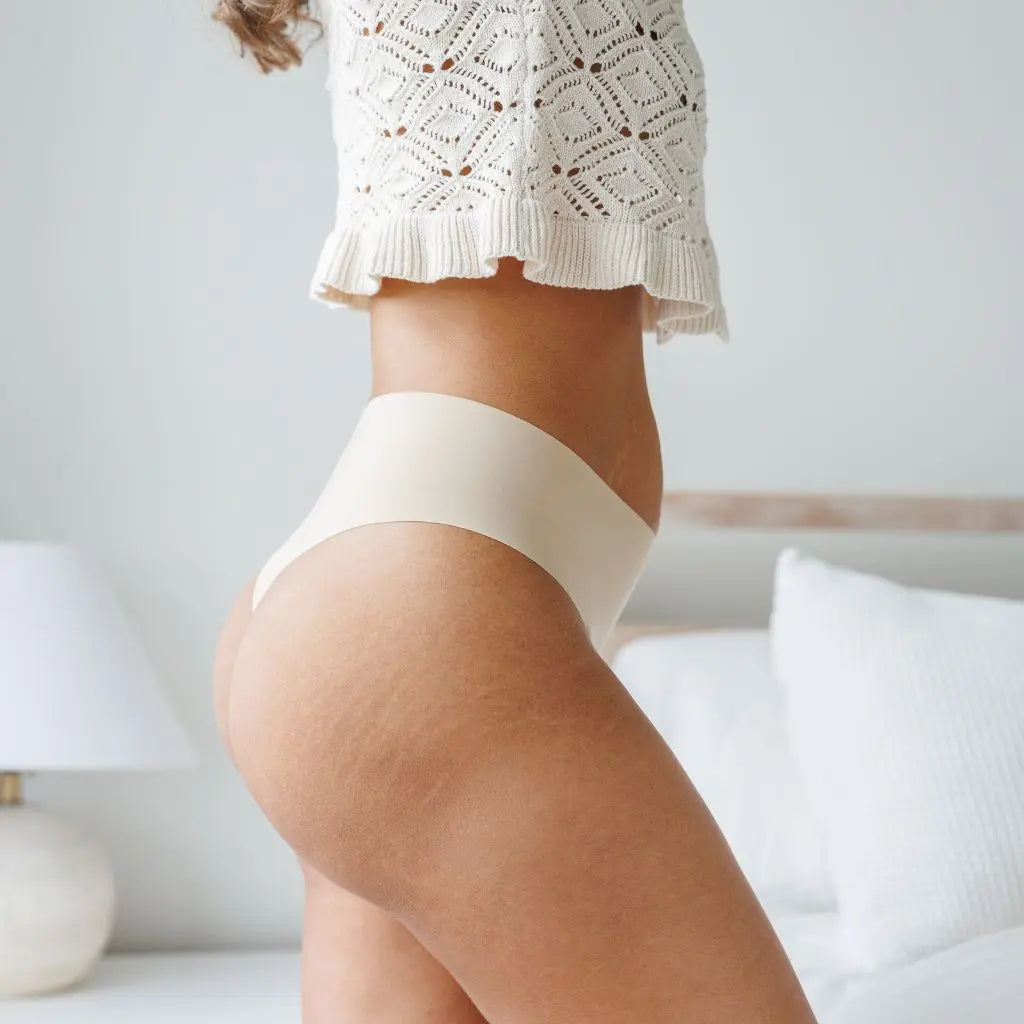
The second trimester is usually when the high-waisted thong becomes the go-to cut for many pregnant women. Its band rises high enough to pass under the growing belly while wrapping it gently, without creating a horizontal pressure point. It follows the growth of your belly thanks to the elasticity of the nylon-elastane fabric instead of resisting it.
The collection of seamless high-waisted thongs is available up to XL, which gives you room for size adjustments throughout the second and third trimesters.
Wider hips and a size to re-evaluate
The hips start widening in the second trimester in preparation for birth. Even if the belly is the most visible change, the hips and lower back are changing too, which can affect how comfortable underwear feels at the sides and the band. If underwear that fit well early in pregnancy starts leaving marks on your hips or slipping around mid-pregnancy, it's often the signal to go up a size.
The usual rule, choosing the smaller size when in doubt, is partly reversed during pregnancy: it's better to have slightly roomier underwear than to squeeze areas of the body that are in full transformation. One size above your usual is often the right call from mid-pregnancy on.
Skin sensitivity in the second trimester
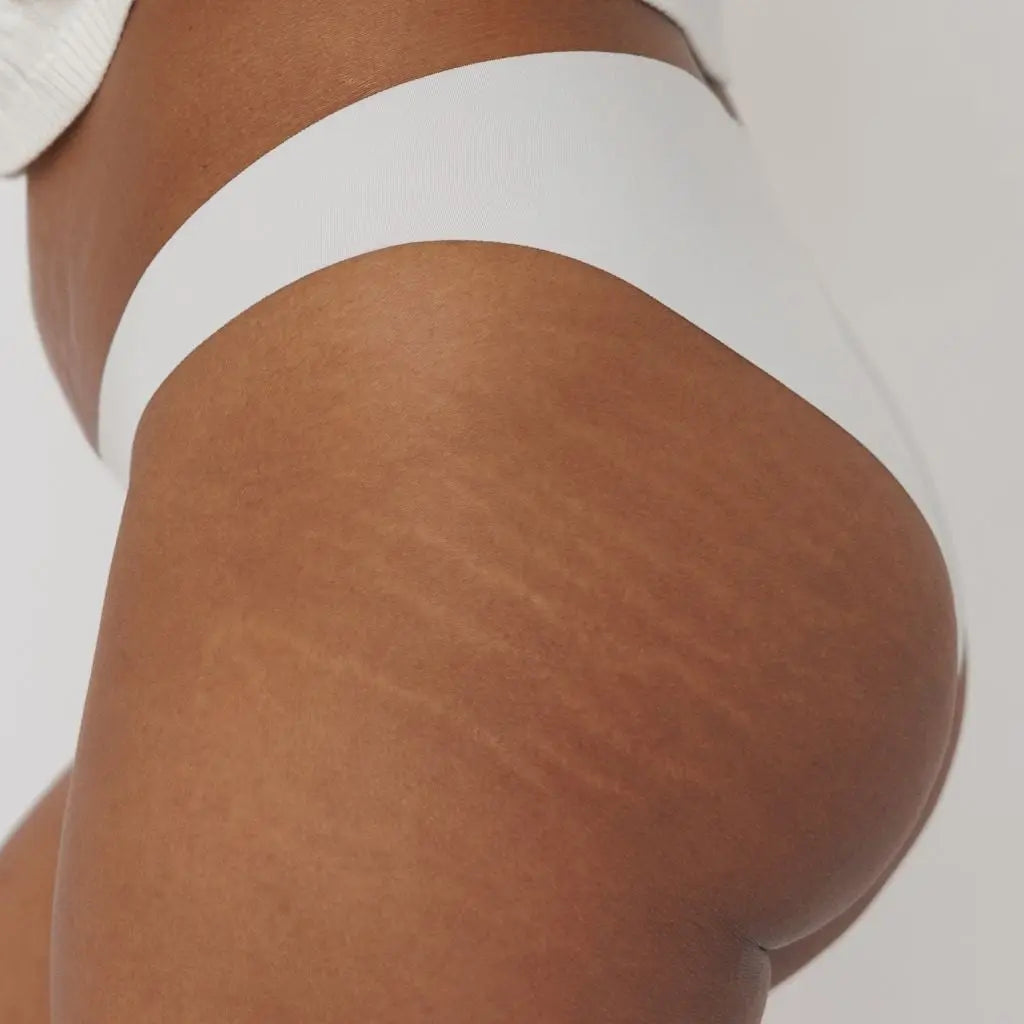
The skin on your belly starts stretching in the second trimester, which can make it more sensitive to friction in that area. Underwear whose top edge touches the skin of the growing lower belly needs perfectly smooth finishes. The laser-cut edges of LICA Wear seamless underwear create no ridge and no friction on stretching skin, which sets them apart from ordinary underwear whose elastic edge can create a pressure line on an expanding belly.
Third trimester (weeks 27 to 40): maximum comfort and constant adjustment
The third trimester is the one of maximum adaptation. The belly has reached a significant volume, getting around takes more effort, sleep is harder, and the body is preparing for birth with new hormonal and physical changes. At this stage, your underwear has to meet needs that didn't exist at the start of pregnancy.
Gentle belly support without compression
In the third trimester, the top priority is no abdominal compression at all. Anything that presses on the belly, whether it's a rigid elastic, a band that's too narrow or a fabric that doesn't stretch enough, quickly becomes uncomfortable and can worsen the tension already present in the lower back and hips.
The 37% nylon-elastane high-waisted thong offers the best balance between support and freedom at this stage: the band wraps the lower belly without constricting it, and the fabric follows every movement of your body with enough stretch to never resist the growth. Many women say that the soft, wrapped feeling of the high-waisted band even brings a little relief to the lower belly during long days standing or sitting.
The Brazilian as a comfortable alternative
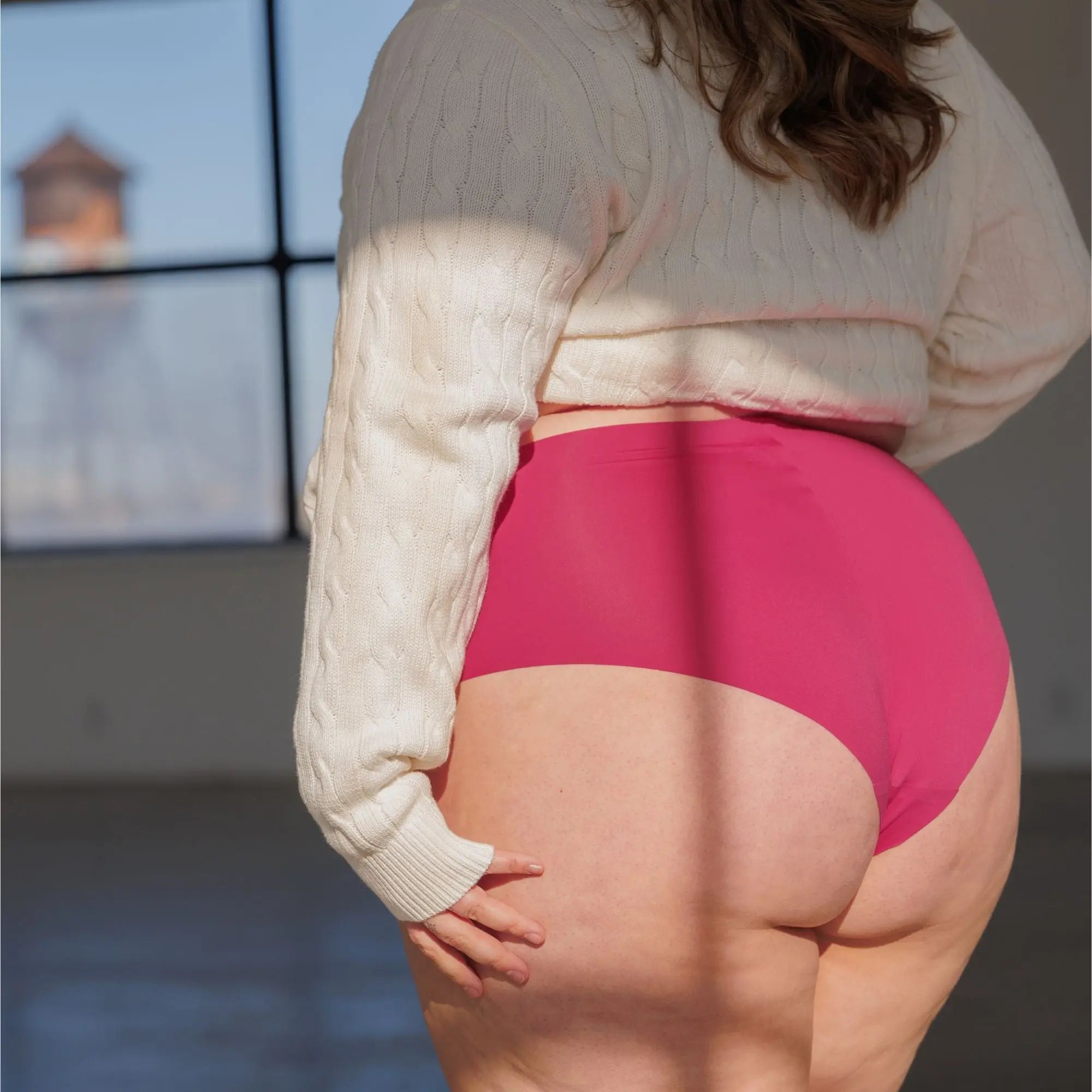
If you prefer more coverage in the back during the third trimester, especially because sitting for long periods creates discomfort around the buttocks and lower back, the seamless Brazilian is a good alternative. It covers more of the buttocks than the thong while staying light and friction-free thanks to its laser-cut edges. Its high cut on the hips avoids side pressure points on hips that can be sensitive at this stage.
The collection of seamless Brazilians and the collection of seamless bikini briefs offer options with more coverage if you prefer them at the end of pregnancy.
Your size in the third trimester
In the third trimester, you'll often need one or two sizes up from your pre-pregnancy size. That's not a signal to keep it for good: your size will probably come back postpartum, but during these last weeks, comfort comes before everything else. Having a few pairs in a larger size specifically for late pregnancy and the first weeks after birth is a practical investment.
Wearing underwear at night in the third trimester
Sleep becomes difficult in the third trimester for many women. If wearing underwear at night is part of your routine, the cut should be even lighter and less compressive than during the day. The high-waisted thong or the classic thong, depending on your preference, are the best cuts for nighttime at this stage: their minimal fabric reduces the heat and moisture that build up overnight, and with no rigid edges they add no pressure to a body that's already under strain.
After birth: the postpartum transition
The first weeks after birth are a period of rapid transition. The body starts returning to its pre-pregnancy shape, but not immediately or in a straight line. The belly stays for several weeks, the hips may stay wider, and the skin can be more sensitive because of postpartum hormonal changes.
You can keep wearing your pregnancy underwear after birth as long as it's comfortable. There's no exact moment when you need to go back to your previous size: the signal is the same as during pregnancy, underwear that slips is too big, underwear that squeezes or leaves marks is too small. If you experience postpartum hot flashes and night sweats linked to the hormonal drop, the article on seamless underwear and hot flashes covers those specific aspects.
To understand how to recognize the right moment to go back to your usual size, the article on how to tell if your seamless underwear is too small or too big gives practical guidelines that apply both during and after pregnancy.
The criteria that don't change from one trimester to the next
Whatever week of pregnancy you're in, three criteria stay constant when choosing seamless underwear during this period.
No abdominal compression is non-negotiable at every stage. No rigid elastic, no band that resists, no fabric without enough stretch to adapt to a growing belly.
A 100% cotton gusset is especially important during pregnancy, a time when intimate health deserves extra attention. The pre-shrunk cotton gusset in every pair of LICA Wear seamless underwear provides the breathability your intimate area needs throughout the nine months.
Re-evaluating your size regularly, ideally every trimester, is the third constant. The body changes too quickly during pregnancy to assume the same size will fit from start to finish. Underwear in the right size is underwear you forget you're wearing: if you start feeling it, your size is worth reviewing.
To learn more about the properties of nylon-elastane fabric and what makes seamless underwear especially well suited to body changes, LICA Wear's complete guide to invisible underwear covers these aspects in detail.
Frequently asked questions about seamless underwear during pregnancy
In which trimester should you change your underwear cut during pregnancy?
There's no universal moment, but the second trimester is generally when the change becomes necessary for most women. It's when the belly starts showing and pushing against the band of low-rise underwear that switching to the high-waisted thong makes a concrete difference. In the first trimester, your usual cut often still works well, as long as you adjust the size if your skin becomes more sensitive or if bloating creates discomfort in the lower belly.
Should I go up a size from the start of pregnancy?
Not necessarily from the start, but stay attentive as soon as the first signs of discomfort appear: red marks on the hips, a feeling of compression on the lower belly, or underwear that slips because your hips have started to widen. During pregnancy, unlike the usual rule, it's better to go up a size when in doubt rather than down. Nylon-elastane fabric adapts to the body, but a size that's too small can't compress any further without creating discomfort on a changing body.
Can you wear the same seamless underwear throughout your pregnancy?
Rarely, and that's normal. Pregnancy transforms the body significantly over nine months, and it's common to adjust your size once or twice between the first and third trimesters. Some women also change cuts along the way, for example going from a classic thong to a high-waisted thong mid-pregnancy. The key is not to stick with underwear that causes discomfort out of loyalty to a size or a style: the signal is always the same, underwear you don't feel is underwear in the right size and the right cut for that exact moment of your pregnancy.
Pregnancy is a time of continuous transformation, and your underwear should evolve with it. In the first trimester, the priority is softness on skin that has become more reactive. In the second, switching to the high-waisted thong supports your growing belly without compression. In the third, maximum comfort comes before everything else, often with a larger size and a cut that puts no pressure on a body preparing for birth. In every case, fabric with no seams, no rigid edges and a cotton gusset is the foundation of underwear that goes through your whole pregnancy with your body rather than against it.