
Some phrases are heard so often that they end up being taken as truths. "You get used to discomfort" is one of them. As if the body had to learn to tolerate what squeezes, irritates, slips, or compresses. As if discomfort was an obligatory passage.
And yet, getting used to it doesn't mean it's normal.
Why we believe we eventually get used to it
The idea of bodily adaptation is deeply rooted in our culture. We find it in sports, at work, in fashion, and particularly in underwear. We often hear that "it will settle," that "the body will get used to it." This belief partly comes from the fact that the body is indeed capable of adapting. But this ability has a downside.
Getting used to it, in many cases, mainly means that the brain stops sending warning signals. Not that the problem has disappeared.
For underwear, this translates into sensations that we eventually ignore: a seam that digs in, a band that rolls, a fabric that slightly irritates. Nothing urgent, nothing dramatic, but an accumulation of micro-discomforts that become the norm.
Getting used to it is not synonymous with comfort
Real comfort is mainly noticed by its absence. We don't think about our underwear when it's well-designed. It doesn't require adjustment, doesn't remind us of its presence with every movement, doesn't create distraction.
Conversely, getting used to discomfort means that the body has learned to tolerate something that doesn't truly suit it.
A too-tight elastic band may eventually seem acceptable, but it continues to compress. A less breathable material may become tolerable, but it still retains moisture. An ill-fitting cut may seem correct, but it subtly limits freedom of movement.
These are details, but everyday life is made up of details.
Situations we too often normalize
One only needs to look at a typical day to see how much discomfort is integrated as normal.
The panties you adjust getting out of the car. The visible line under leggings attributed to too-thin fabric. The feeling of compression at the end of the day associated with fatigue. The need to take off your underwear as soon as you get home.
These situations are so frequent that they go unnoticed. Yet, they are often linked to underwear that does not respect the body in motion. Our guide on underwear to wear under leggings concretely explains why certain models show more and how to avoid the problem.
An active woman rarely spends her days motionless. She sits, stands, walks, stretches, bends, sometimes exercises. Underwear that doesn't follow these movements quickly becomes a source of irritation, however subtle.
The role of underwear in overall comfort
Underwear is in direct contact with the skin for hours. It influences posture, breathing, and how we move. When ill-fitting, it creates constant tension, sometimes imperceptible, but very real.
Conversely, well-designed underwear acts as a neutral base. It doesn't compensate for discomfort; it eliminates it.
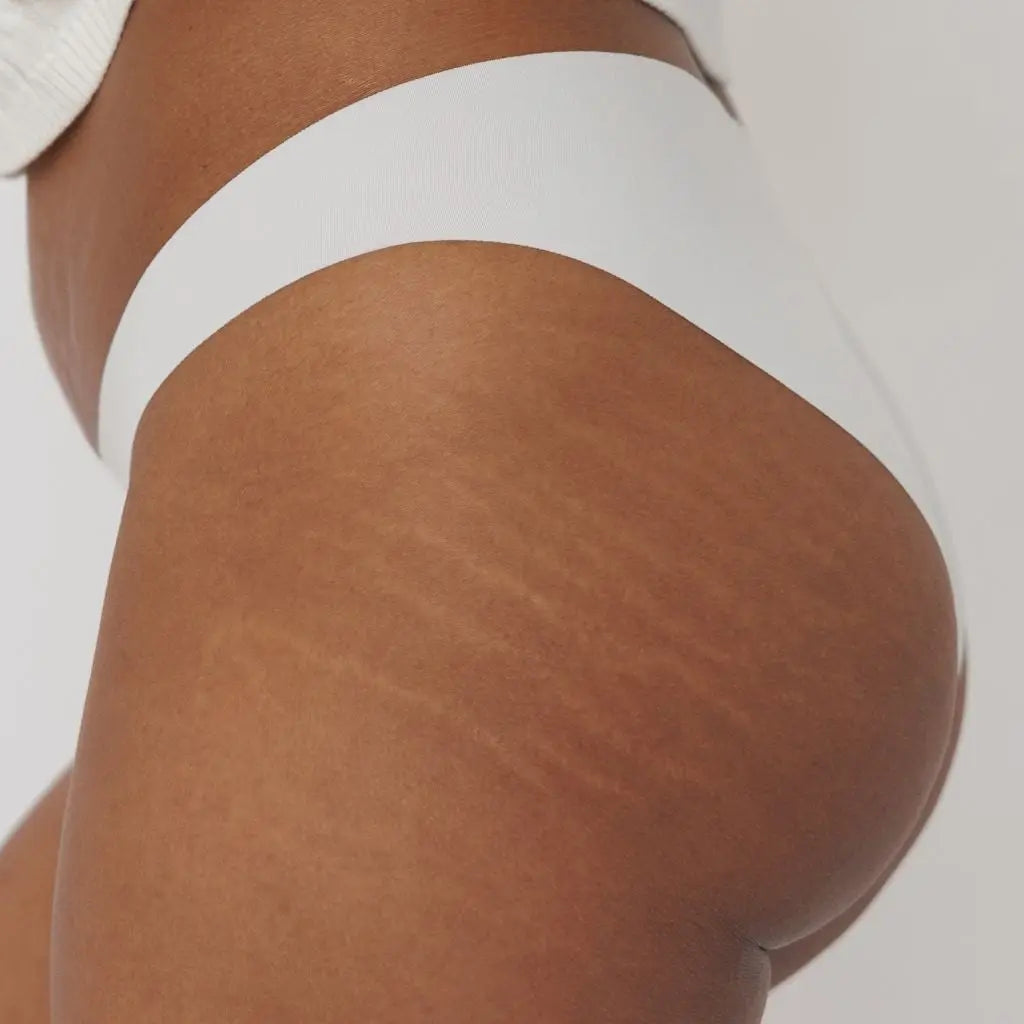
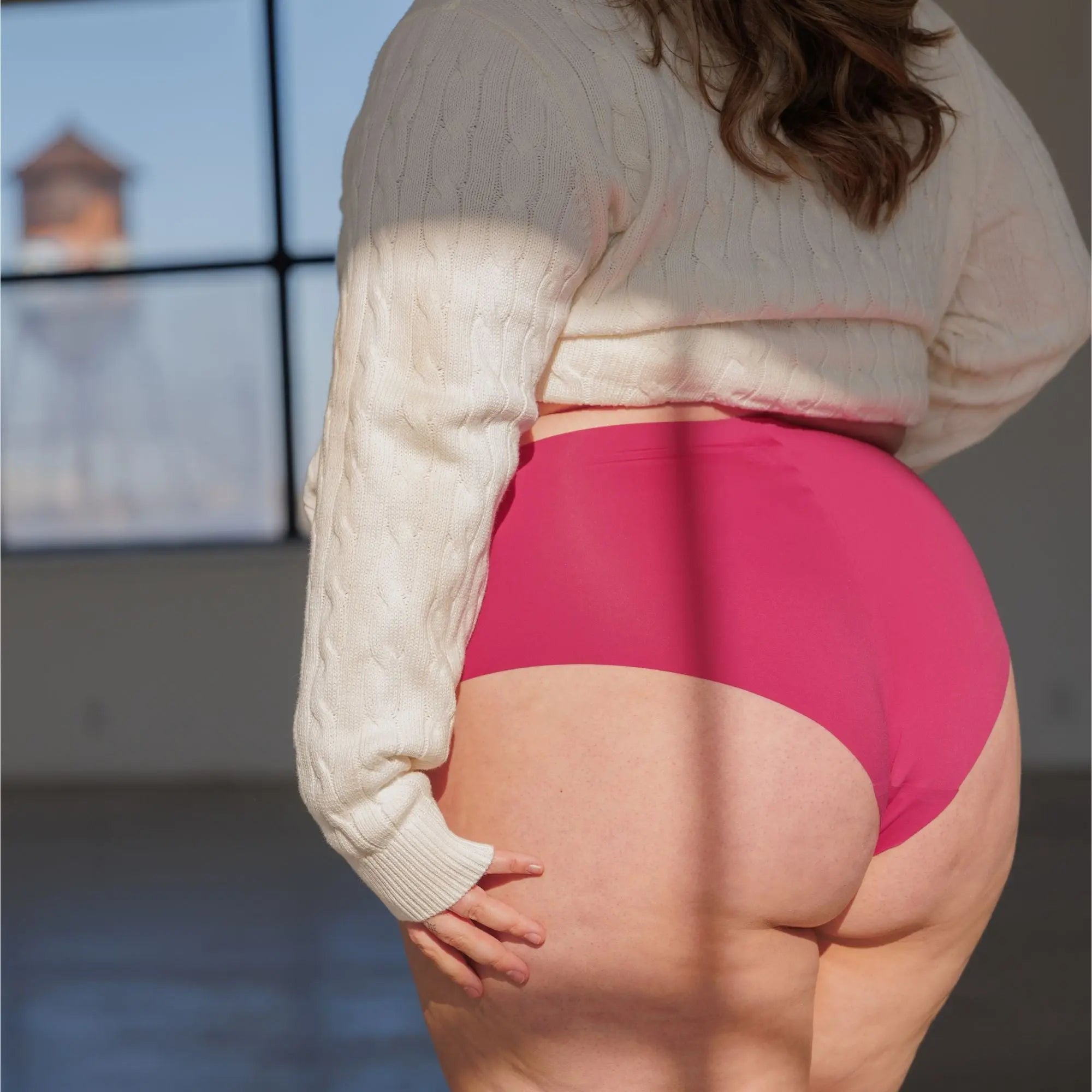
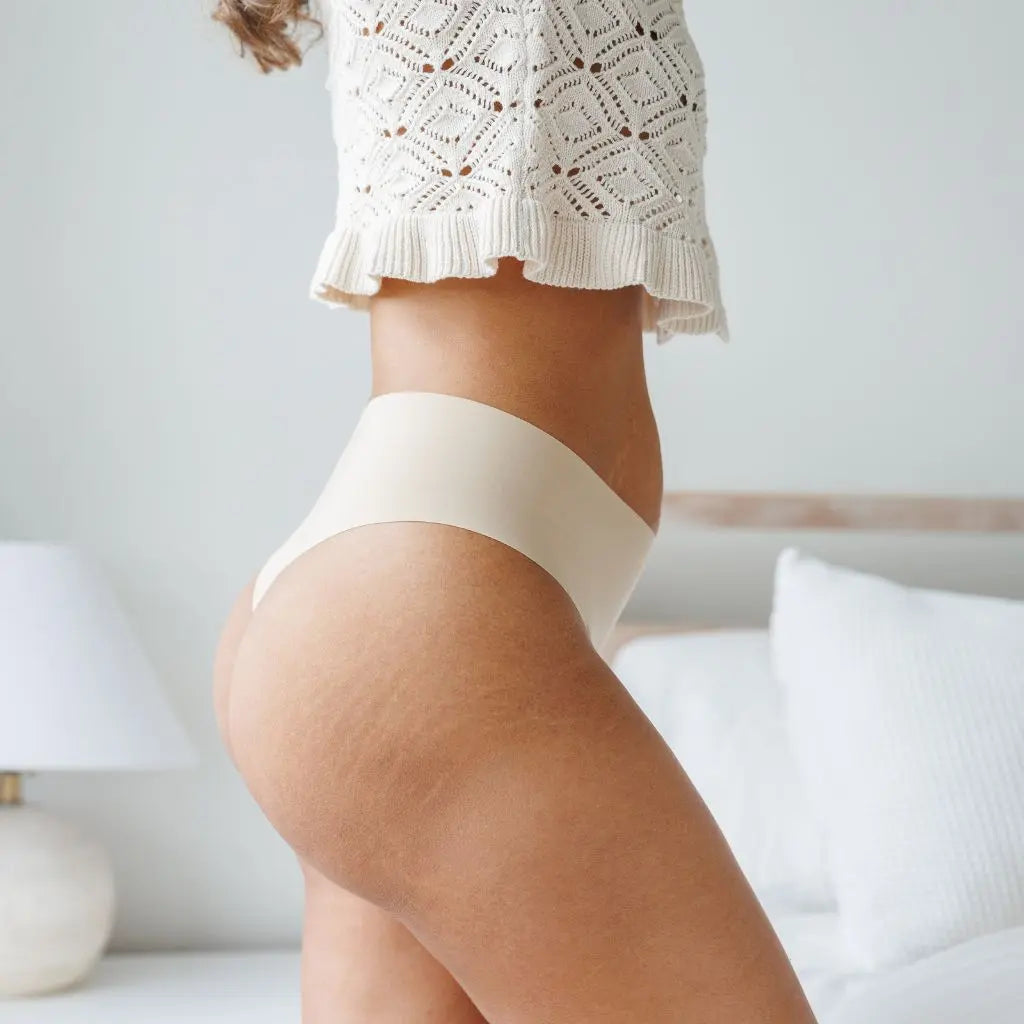
This is where the notion of invisible comfort takes on its full meaning. A seamless cut, clean edges, soft and stretchy material, stable support without excessive compression. Nothing extraordinary, but a sum of coherent choices. To better understand what technically distinguishes truly invisible underwear, the complete guide to invisible underwear details the design elements that truly make a difference.
Freedom of movement as a barometer of comfort
Freedom of movement is an excellent indicator of true comfort. Underwear that restricts, even slightly, eventually influences how one stands or moves.
We cross our legs differently. We avoid certain movements. We unconsciously adjust our posture. Over time, these micro-adjustments become automatic. We no longer notice them, but the body continues to manage them.
Seamless underwear, designed to hug the body rather than constrain it, allows for a rediscovered sense of fluidity. It accompanies movement instead of hindering it.
Why comfort should never be a compromise
For a long time, comfort was opposed to aesthetics. As if choosing one implied giving up the other. This opposition contributed to the myth of habituation.
We accept discomfort because the style is pretty. We tolerate compression because the cut is flattering. We make compromises, telling ourselves it's normal.
However, advances in design and materials now allow for the creation of underwear that is aesthetic, discreet, and comfortable all at once. Comfort should not be a secondary option. It should be a basic criterion, just like cut or color.
What research says about clothing comfort
Researchers at Northwestern University demonstrated, in a study on enclothed cognition, that clothing worn directly influences cognitive processes: concentration, posture, self-perception. This phenomenon applies to both visible clothing and that which is never seen. What you wear under your clothes matters.
The Cleveland Clinic, for its part, reminds us that the materials and cut of underwear have a direct impact on physical comfort and intimate health daily, and that these choices deserve to be made with care rather than out of habit.
Rethinking your relationship with discomfort
Freeing yourself from the myth of "you get used to it" often begins with a simple awareness. Asking yourself how you truly feel in your underwear, without minimizing the sensations.
Do they stay in place all day? Do they let the skin breathe? Do they make you forget they're there, even after several hours?
If the answer is no, it's not a personal failure. It's simply a signal that something can be improved. To explore this topic in more depth, check out our article on underwear and self-confidence.
FAQ
Is it normal to feel discomfort with your underwear after a few hours of wear? No, it's not inevitable. Well-designed and correctly sized underwear should not create a feeling of compression, rubbing, or slipping after a few hours. If it does, it's usually a signal related to size, cut, or fabric quality.
How do I know if I've just gotten used to discomfort? A simple test: wear them for a full day, noting how many times you think about your underwear. Comfortable underwear never calls attention to itself. If you have to adjust it, reposition it, or want to take it off as soon as you get home, it probably isn't truly suitable.
What criteria should I look for when choosing truly comfortable underwear? The three most determining elements are the cut, adapted to your body shape and activities; the material, which should be soft, stretchy, and breathable; and the finishes, without thick seams or rigid elastic bands. Seamless laser-cut panties generally offer the most discreet wearing experience. The size chart can also help choose the exact size, which often makes all the difference.