
Menopause isn't a one-time event. It's a transition that unfolds over several years, often between the ages of 45 and 55, and it changes the body gradually and sometimes in surprising ways. Your skin changes, your shape shifts, your nights become less predictable, and what used to feel comfortable may not feel the same anymore. Underwear is one of those small everyday details worth rethinking during this time, not because you need to change everything, but because understanding what's happening in your body helps you make better choices.
This guide explains how menopause really changes what you need from your underwear, and which cut of seamless underwear best adapts to each aspect of this transition.
Menopause in Canada: a few key facts
According to The Maple Leaf, the Department of National Defence magazine, the average age of menopause in Canada is 51, and perimenopause, the transition phase leading up to menopause itself, starts at around 45 on average. Menopause is officially confirmed after 12 consecutive months without a period. Symptoms last seven years on average, which means that for many women, this transition spans a good part of their fifties.
The most common symptoms include hot flashes, sleep problems, mood changes, dry skin and changes in body shape. Each of these symptoms has a direct or indirect impact on how comfortable your underwear feels day to day.
Body changes that affect underwear comfort
Weight redistribution and changes in body shape
One of the best-documented changes of menopause is the redistribution of body fat. A study published in the Journal of Clinical Medicine (NCBI) found that postmenopausal women have significantly more abdominal and visceral fat than premenopausal women, regardless of total weight. Your silhouette tends to change: your hips and waist may shift in proportion, and your lower belly often carries more volume than before.
In practical terms, this means the underwear size that fit you before menopause may no longer be the right one, even without any significant weight change. Your lower belly and hips respond differently to the same cut than they used to. A pair that fit well at 45 may start squeezing your belly or hips at 52, not because you've gone up a size overall, but because your shape has changed in specific areas.
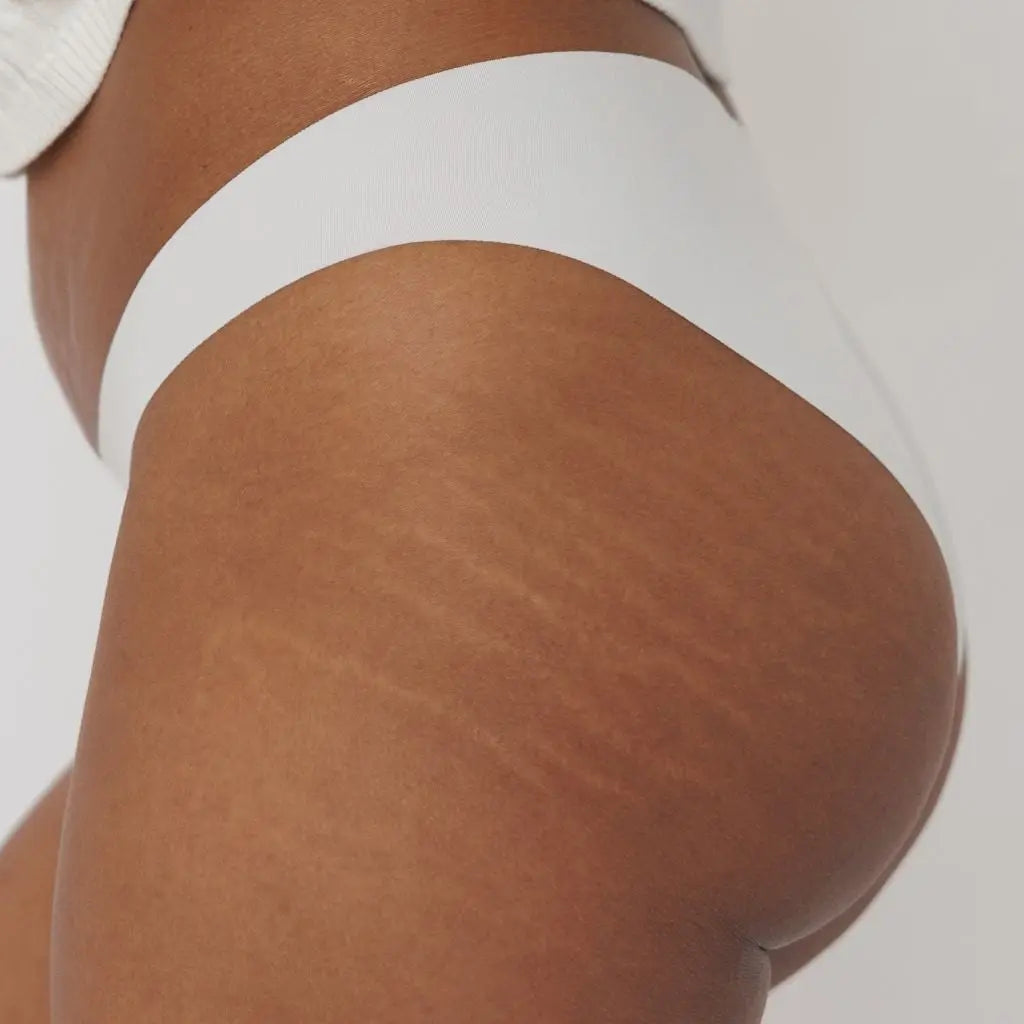
It's the perfect time to reassess not only your size, but also your cut. A high-waisted thong that offers gentle support for your lower belly can become much more comfortable than a classic low-rise thong during this period of changing body shape.
Dryness and more sensitive skin
Falling estrogen levels during menopause directly affect your skin. According to the Cleveland Clinic, estrogen helps your skin retain water and stay plump. When it drops, your skin loses some of the molecules that keep it hydrated, which makes it drier, thinner and more reactive to rubbing and pressure.
When it comes to underwear, this dryness has direct consequences. Drier skin is more sensitive to friction: side seams, rigid elastics and thick edges that never bothered you before can start causing irritation or redness. The most common contact areas, your hips, groin and lower belly, become more reactive.
Seamless underwear with laser-cut edges meets this need head-on: with no side seams and no raised edges, friction is kept to a minimum, which protects skin that has become more delicate. The smooth, silky nylon-spandex fabric glides over your skin instead of rubbing against it.
Hot flashes and night sweats
Hot flashes and night sweats are the most common vasomotor symptoms of menopause. During the day, they bring sudden bursts of heat and sweating. At night, they can interrupt your sleep and leave you with lingering dampness against your skin.
For nighttime wear, a fabric that wicks moisture away instead of trapping it is especially important. The nylon-spandex in LICA Wear seamless underwear moves moisture to the outer surface of the fabric where it can evaporate, keeping your skin drier after each episode. It's the difference between waking up in damp fabric clinging to your skin and waking up in fabric that has already wicked away most of the sweat.
To learn more about managing hot flashes and what to look for in underwear for these episodes, the article on seamless underwear and hot flashes covers these topics in detail, looking at every cause of hot flashes, not just menopause.
Size changes throughout the transition
Perimenopause and menopause stretch over several years, during which your body keeps changing gradually. A size that works at the start of perimenopause may no longer be ideal two years later. It's a practical reality that surprises many women: they've worn the same size for years, and suddenly something just isn't right.
Checking your underwear size every six to twelve months during this time is a simple habit that keeps you from wearing underwear that doesn't fit without really knowing why it's become uncomfortable. Signs that a pair has become too small include lingering red marks on your hips, a squeezing feeling around your belly, and fabric that rides up. Signs that it has become too big include gradual slipping and wrinkles from excess fabric. The article on how to tell if your seamless underwear is too small or too big helps you figure out which of the two is going on.
Which cut to choose during menopause
The high-waisted thong: gentle support for your lower belly
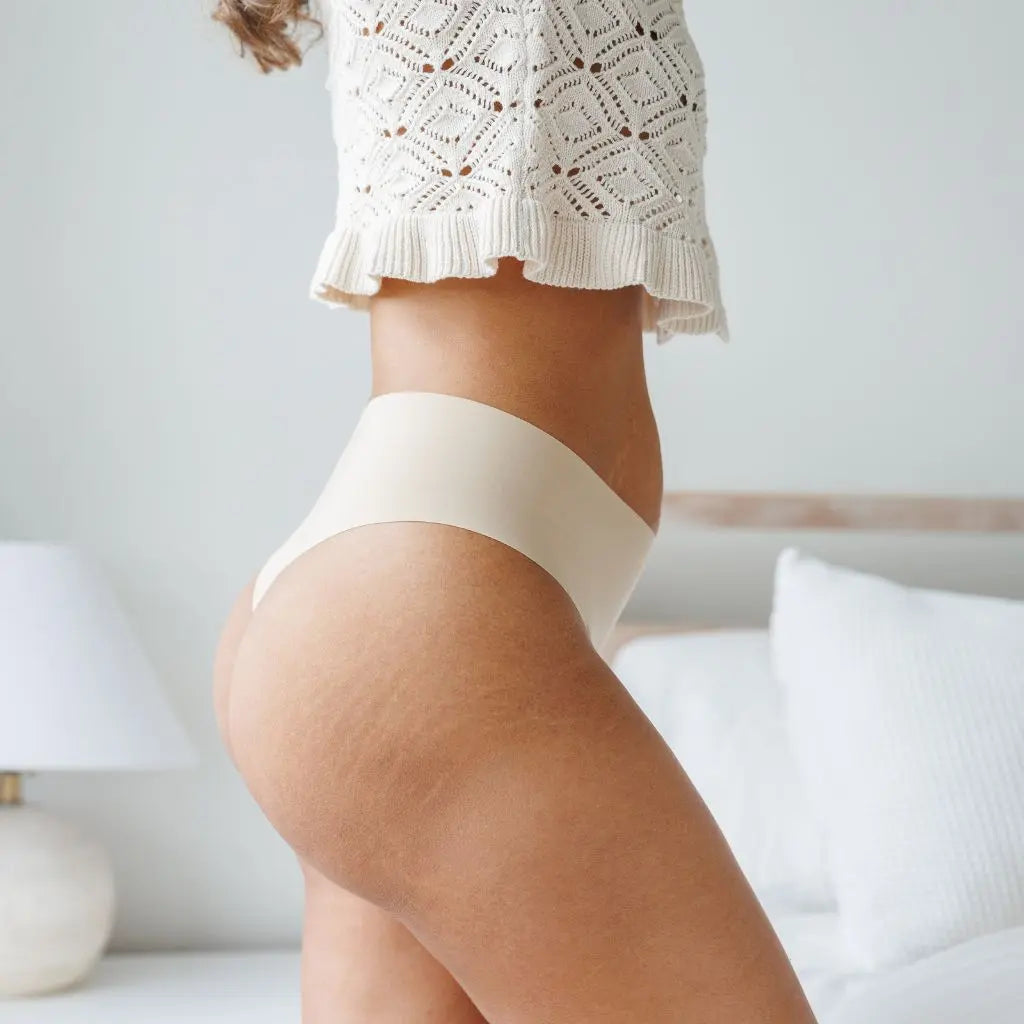
The high-waisted thong is often the most comfortable cut during menopause, especially if your weight is shifting toward your lower belly. Its high nylon-spandex waistband gently wraps that area without a rigid elastic, giving you light, comfortable support rather than compression. If you get hot flashes, its minimal fabric at the back also reduces the heat that builds up during an episode.
For nighttime wear, especially during night sweats, the high-waisted thong combines gentle support for your belly with the lightness of minimal fabric. The seamless high-waisted thong collection comes in neutral and dark colors that are well suited to wearing at night.
The Brazilian brief: comfortable coverage for active days
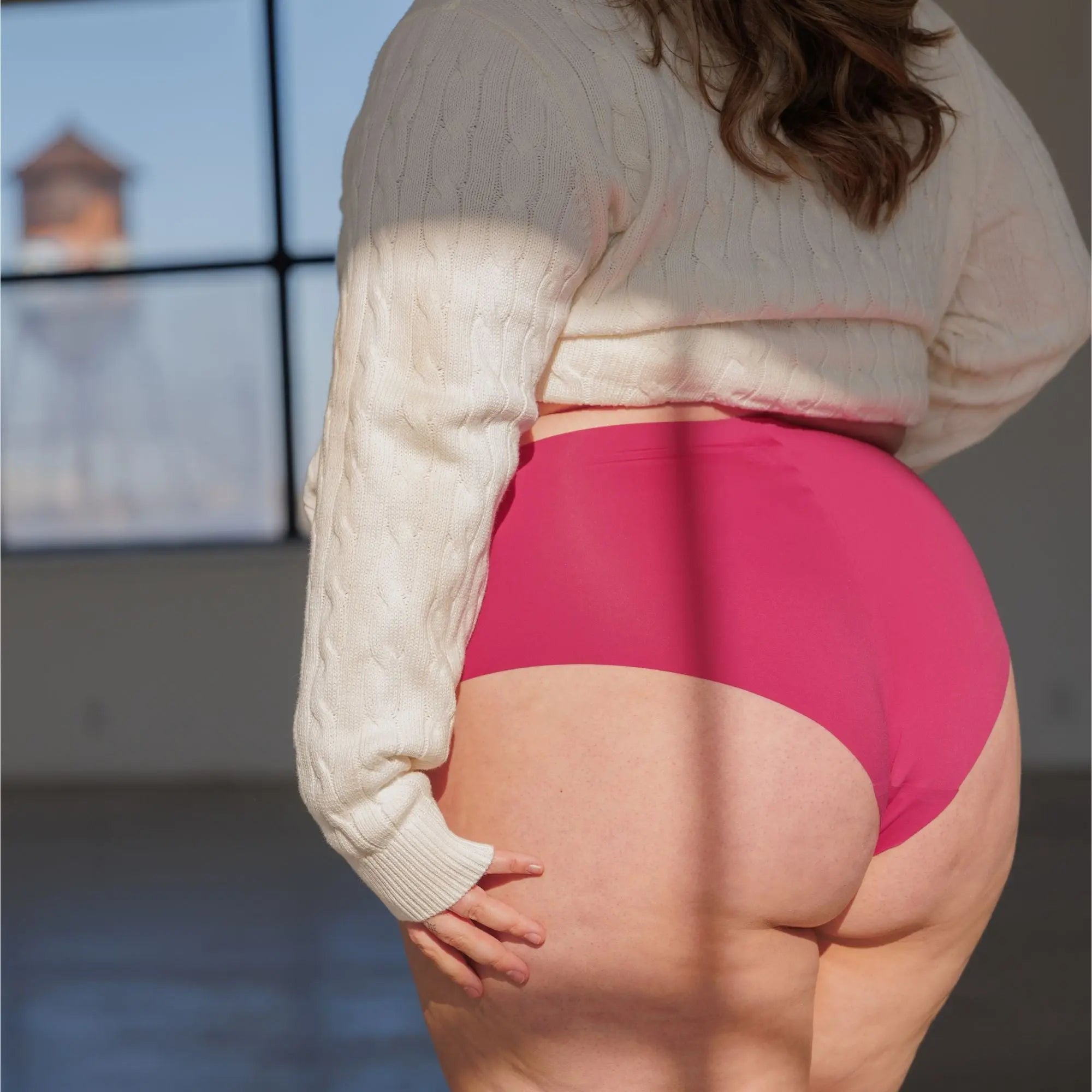
On days when you'd rather have more coverage, the seamless Brazilian brief is a great compromise during menopause. It covers more of your backside than a thong while staying light and friction-free thanks to its laser-cut edges. Its higher cut at the hips avoids the horizontal line that can irritate more sensitive skin in that area.
If your hips have changed shape, the Brazilian tends to follow your new curves better without creating pressure at the sides. The seamless Brazilian brief collection comes in nude and dark shades that go with every outfit.
The bikini brief: maximum coverage for tougher days
During the phases of menopause when discomfort is more intense, whether because of frequent hot flashes, especially sensitive skin or a marked change in body shape, the seamless bikini brief offers the most generous coverage. Its nylon-spandex fabric stays light despite the larger surface, and its laser-cut edges keep every contact area friction-free.
The seamless bikini brief collection offers this style in understated shades that are especially well suited to everyday needs during this time.
Care habits to adjust during menopause
The drier, more reactive skin that comes with menopause also calls for extra attention to how you care for your underwear. Residue from scented detergents or fabric softeners that never bothered you before can start causing reactions on skin that has become more sensitive. Switching to a gentle, fragrance-free detergent and skipping fabric softener is a simple adjustment that can significantly reduce underwear-related skin irritation during this time.
Washing in cold water is still the rule for preserving the stretch of nylon-spandex fabric, and it's also the gentlest option for the fibers, which indirectly helps preserve the quality of the fabric that touches your skin. For all the details on care that protects both the fabric and your skin's comfort, the complete guide to caring for seamless underwear covers every step.
Refreshing your underwear drawer during menopause
Menopause is often the time when the underwear you've collected over the years deserves a second look. A pair that has lost its stretch, no longer fits your current shape, or has fabric that irritates more sensitive skin no longer offers the comfort it should. Sorting through your drawer and replacing pairs with pieces suited to your current shape and needs is a small step that makes a big difference in your daily life.
For guidance on how many pairs to keep in rotation and the signs that it's time to replace them, LICA Wear's complete guide to invisible underwear covers what makes underwear truly suited to everyday life, at every stage of life.
FAQ: seamless underwear and menopause
Why has my usual underwear become less comfortable since menopause started?
Several menopause-related changes can explain this gradual discomfort. Weight shifting toward your belly can make your usual size too tight around your stomach even if your hips haven't changed. Drier skin is more sensitive to friction from seams and rigid elastics. And hot flashes can make fabrics that trap moisture uncomfortable. It's not necessarily a brand or style problem: it's often a combination of a size that needs reassessing and a fabric that needs to suit skin that has become more reactive.
Which cut of seamless underwear is best for menopause night sweats?
For nighttime wear during night sweats, the high-waisted thong is often the most comfortable cut. Its minimal fabric at the back reduces heat buildup, and its high waistband gently supports your lower belly without a rigid elastic that could irritate hypersensitive skin during these episodes. The nylon-spandex fabric wicks moisture to the outer surface of the fabric instead of trapping it against your skin, which shortens how long you feel damp after each episode. For the toughest nights, keeping a spare pair within reach lets you change quickly without fumbling around in the dark.
Should I change my underwear size during menopause?
Not necessarily, but it's a good idea to reassess your size every six to twelve months during the menopause transition, because your shape can change gradually even without any change in your overall weight. Fat shifting toward your belly can make a size that was always comfortable feel slightly too tight around your stomach. If you notice lingering red marks along the waistband or on your hips, or a squeezing feeling that wasn't there before, that's your cue to reassess your size. If you're unsure between two sizes, the rule stays the same: choose the smaller one if the fabric needs to hug your body, unless it's specifically your belly area that feels squeezed, in which case a size up or a cut with a softer waistband, like the high-waisted thong, can make all the difference.
Menopause is a long and personal transition, and it changes the body gradually over several years. The underwear you wear during this time deserves to keep up with those changes: a size you reassess regularly, a cut that fits your new shape, and a fabric that manages moisture without irritating skin that has become more sensitive. The high-waisted thong for gentle support and tough nights, the Brazilian for active days, the bikini brief for more intense phases: every stage of menopause has its cut, and they all share the advantage of a seamless fabric that respects skin in transition.