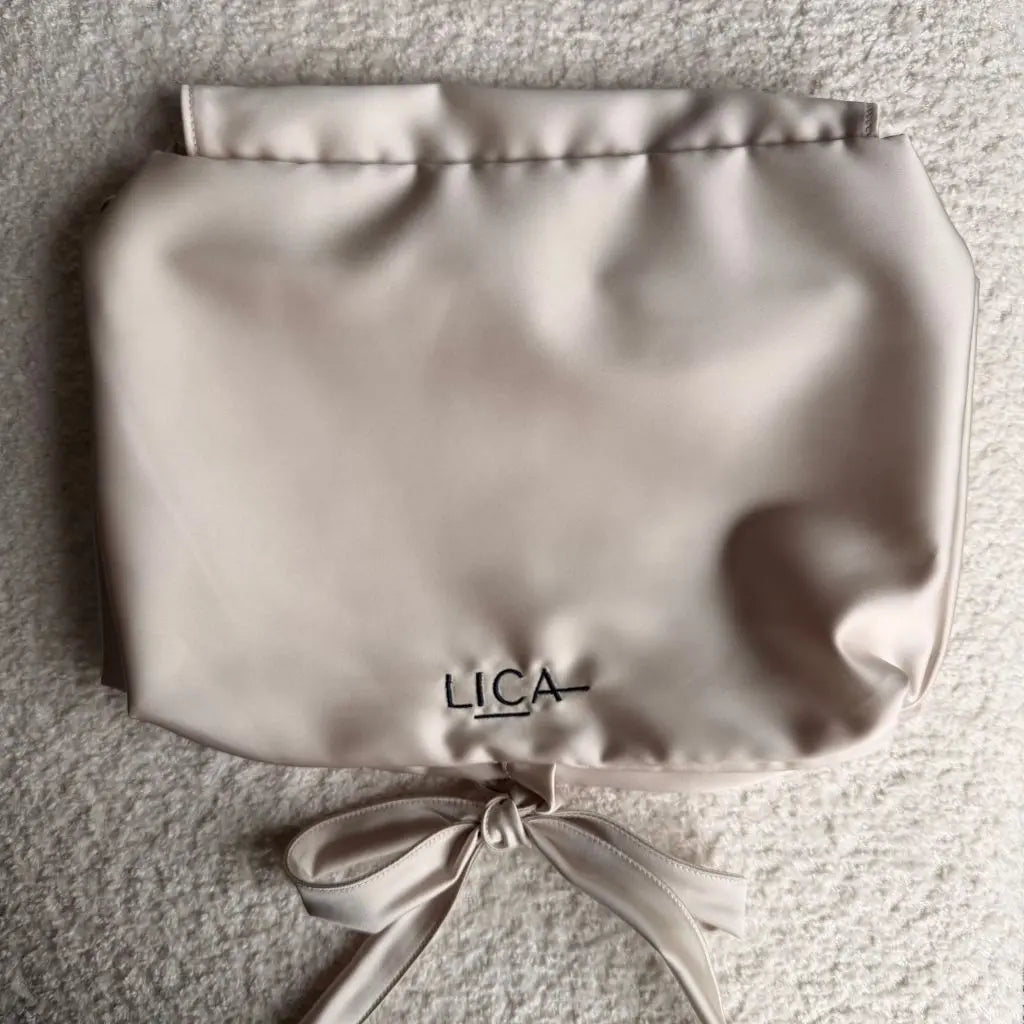

A day at the beach doesn't happen entirely in the water. There's the coming and going, lunch on the patio, the shops along the waterfront, the ride home. All that time spent out of your swimsuit, in a light dress, cotton shorts or an airy kimono, deserves as much attention as the swimwear itself. And that's where the right seamless underwear makes all the difference: between a day spent readjusting and a day you don't give it another thought.
This article looks at why beachwear poses unique underwear challenges, which cut to choose for each type of garment, and how to stay comfortable from the start of the day to the end.
Why beachwear is among the most demanding clothes
Beach outfits are designed to be light, flowy and often sheer. Chiffon dresses, voile kimonos, crochet cover-ups, linen shorts, very thin cotton skirts: these are exactly the fabrics that most easily reveal the underwear beneath them. Sheerness, constant movement from outdoor activities and humid summer heat add up to a combination that puts any ordinary underwear to the test.
On top of that, beach days come with two realities of their own: you often go from heat to wind, from the water to dry land to a stroll through town, and your body sweats more. Underwear that doesn't handle moisture well or doesn't stay in place under these conditions quickly becomes a source of discomfort.
For active days outdoors, seamless underwear made of nylon and spandex meets these needs more effectively than classic cotton underwear, especially because it wicks moisture away instead of holding it against your skin.
What research says about technical fabrics next to the skin
How comfortable underwear feels in hot weather depends largely on how the fabric handles sweat. Textile science researchers have documented that stretch knit fabrics like nylon and spandex actively move moisture toward the outer surface of the fabric, where it can evaporate, rather than holding it against the skin. A study published in Materials (NCBI) on moisture transport in stretch knit fabrics confirms that stretching the fabric, as happens naturally in well-fitting underwear, further improves this wicking ability.
On a beach day when heat and humidity keep changing, that's exactly what you want from your underwear: a fabric that works with your body rather than against it.
Choosing your cut based on your beachwear
As with any outfit, the cut of your underwear should be chosen based on what you're wearing over it. Beachwear falls into a few main categories, each with its own requirements.
Under a flowy beach dress or a long cover-up
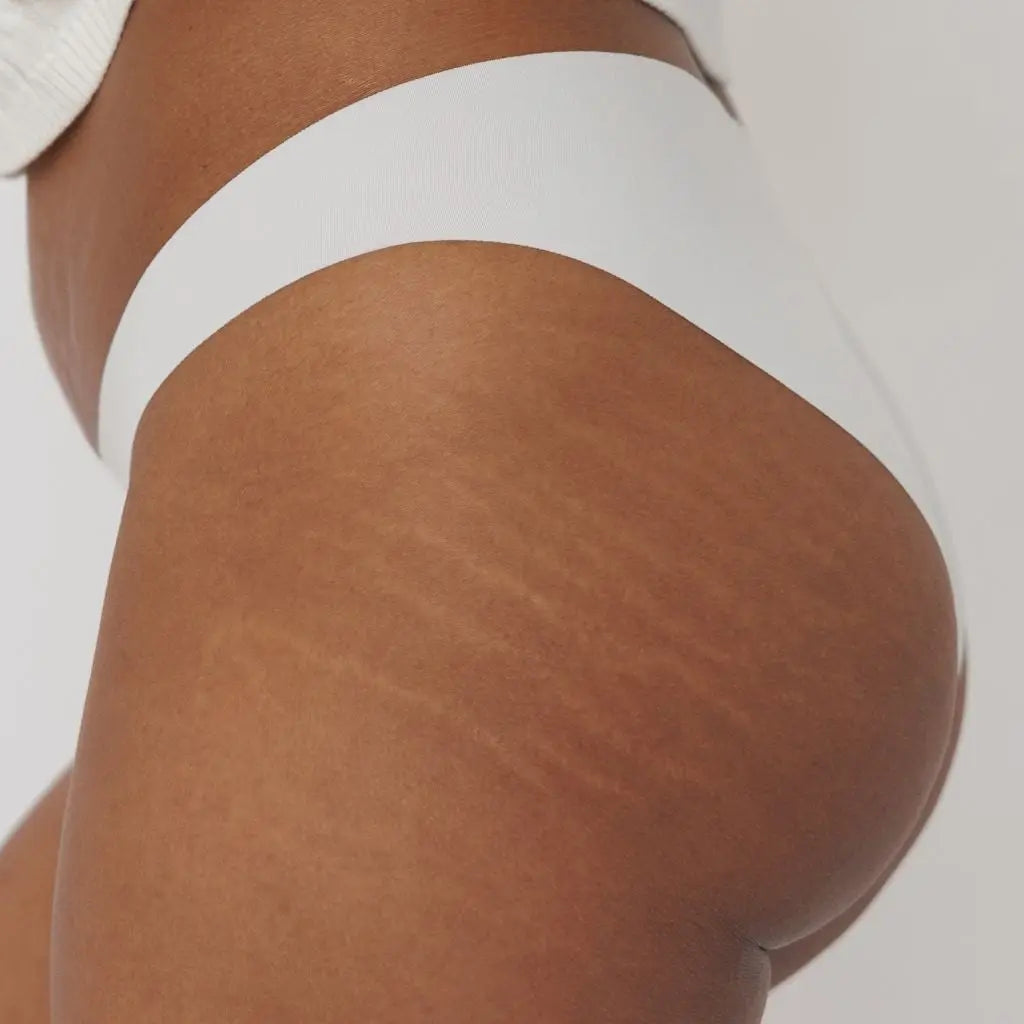
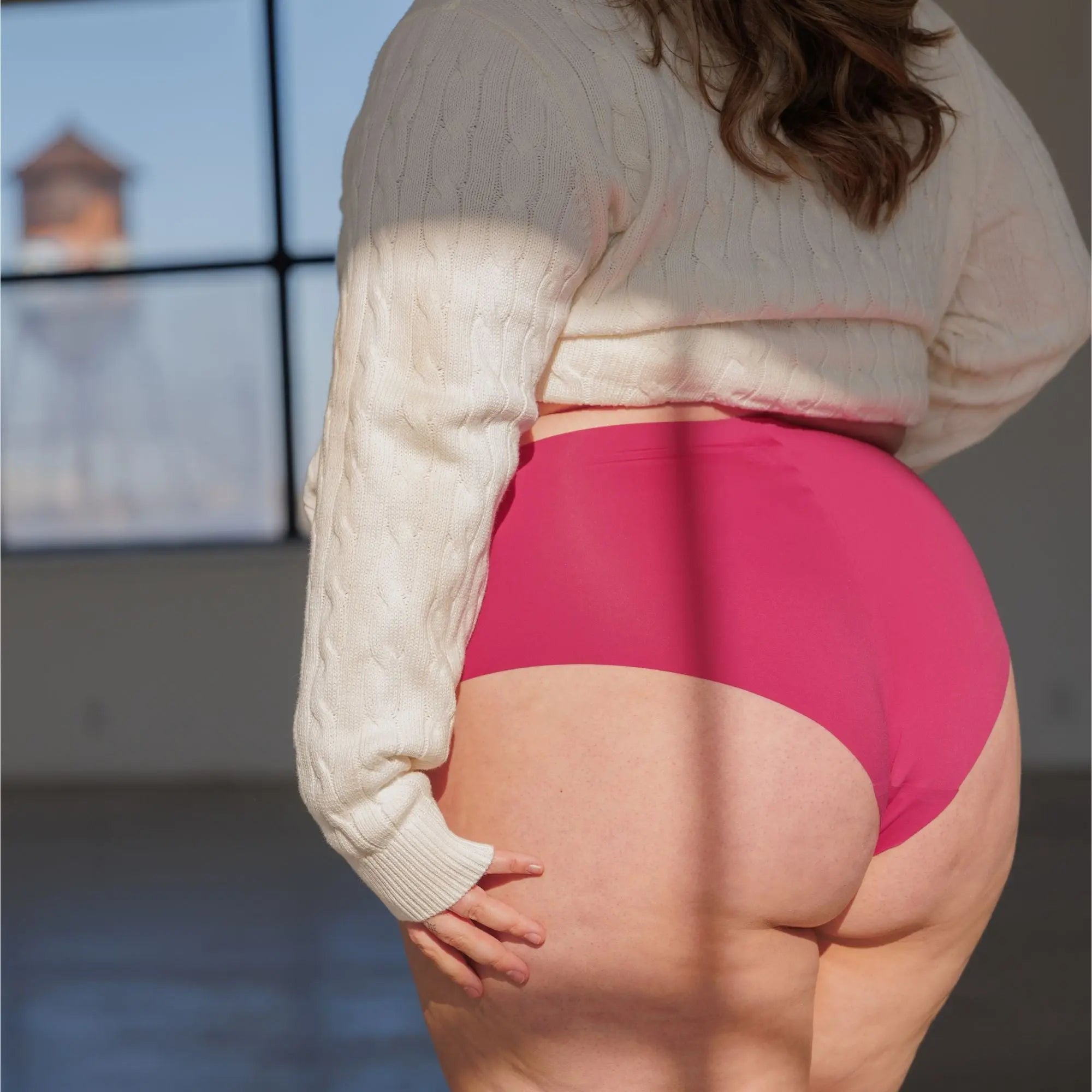
Light beach dresses and long cover-ups are often made of chiffon, voile or very thin cotton. These fabrics drape loosely over the body and move a lot as you walk. Under this type of garment, the seamless Brazilian brief is often the ideal cut: it offers enough coverage to stay comfortable through long hours of wear, while remaining perfectly invisible thanks to its ultra-flat laser-cut edges. Its high-cut leg avoids any visible line or feeling of compression as you move.
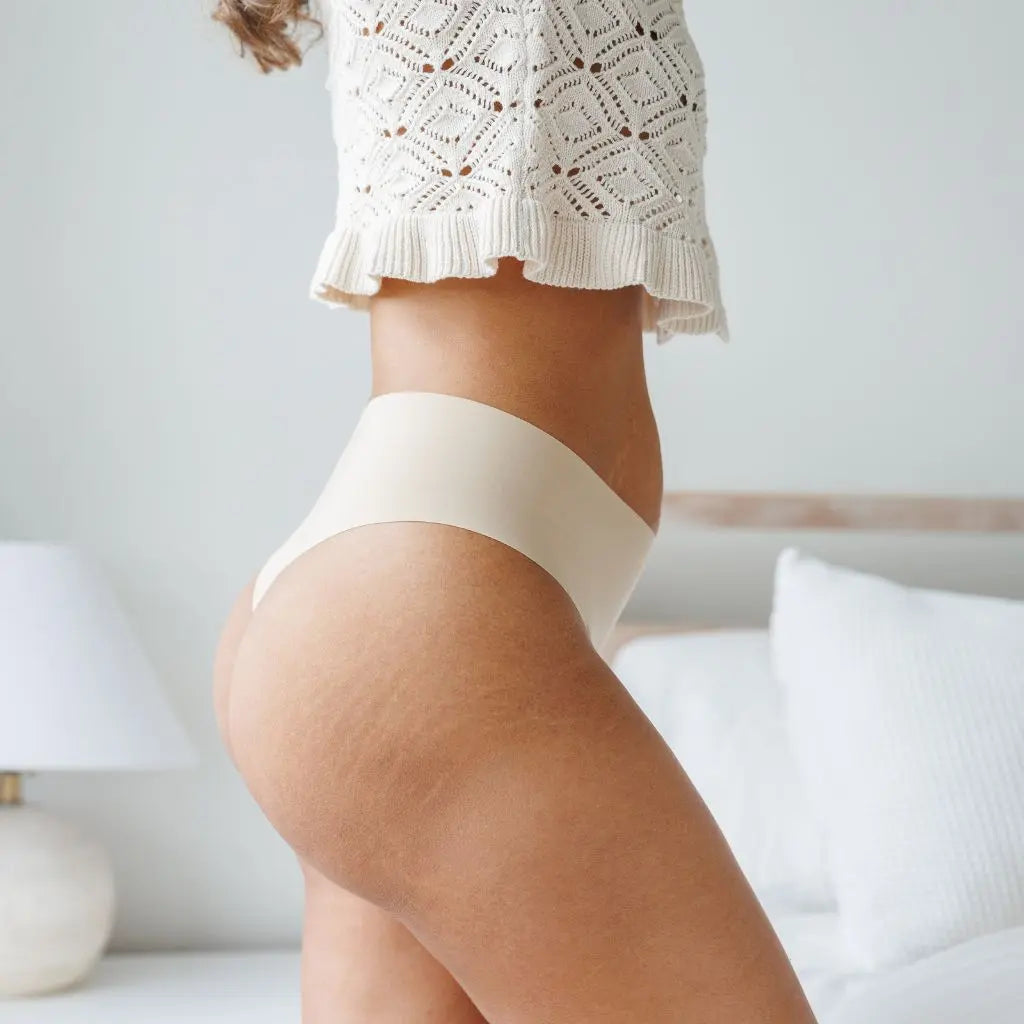
The thong is also a great option if the dress is very sheer or very fitted, because its minimal surface leaves no trace under the fabric. For loose, non-sheer beach dresses, the seamless bikini brief works very well and offers generous comfort for long days.
The seamless Brazilian brief collection and the seamless bikini brief collection offer both styles in colors suited to light summer fabrics.
Under beach shorts or linen shorts
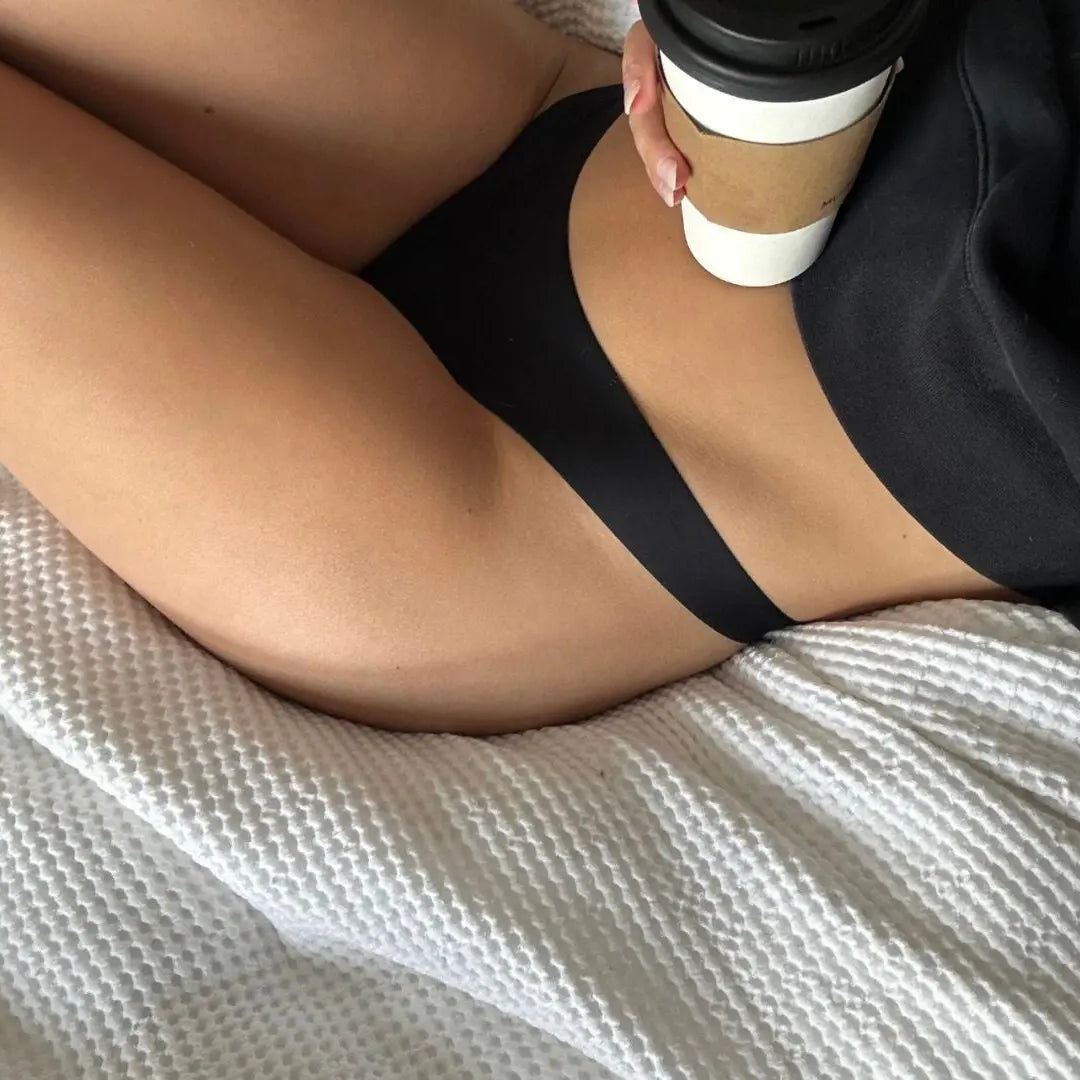
Beach shorts in linen, cotton or lightweight technical fabric are generally more opaque than dresses and cover-ups. The main risk here isn't sheerness but visible lines: the edges of your underwear can show under fitted shorts or a thin, structured fabric. Seamless underwear with laser-cut edges eliminates this problem at the source. The thong and the Brazilian are the most discreet cuts under fitted shorts. Under loose shorts, every cut works well.
Under a beach kimono or a tied sarong
These pieces are worn open or casually tied, often over a swimsuit or a dress. When you wear them on their own over underwear, the fabrics are usually very sheer and move a lot. Here the thong is the cut that shows the least, because its surface is minimal and its edges disappear completely under the most delicate fabrics.
For everything about staying invisible under light and sheer fabrics, the article on what underwear to wear under white and light-colored clothes complements this guide nicely, with advice on color and cut depending on how sheer the fabric is.
The color question under beach fabrics
Beachwear is often white, ivory, pale beige or printed on a light background. These are exactly the colors that most easily reveal underwear in the wrong shade. The rule is the same as for all light fabrics: choose underwear in a shade close to your skin tone rather than white, which would contrast with your skin.
For summer beach days, shades like LICA Wear's SecondSkin Beige or Peach Bloom are especially well suited. They blend in naturally under light summer fabrics while adding a subtle touch of color when they're seen.
If your skin tans in summer, it can help to have two shades close to your skin tone: one for early in the season and one that matches your sun-kissed complexion in July and August. A slightly warmer tone in midsummer often disappears better than a very pale beige chosen in spring.
After your swim: when your choice of underwear matters most
Going from swimsuit back to street clothes is one of the most uncomfortable moments of a beach day if you haven't planned ahead. Putting your clothes back on over a swimsuit that's still wet or slightly damp is an unpleasant feeling, and putting cotton underwear back on in those conditions makes it worse: cotton absorbs the leftover moisture and holds it against your skin for a long time.
Seamless underwear made of nylon and spandex dries much faster than cotton and doesn't hold moisture the same way. If you change after swimming, tucking a clean, dry pair of seamless underwear into your beach bag is one of those small habits that make the end of the day much more comfortable.
It's also one of the reasons beach days call for a spare pair in your bag, just like a dry towel. It's not a luxury; it's simply planning for discomfort before it happens.
How many pairs to bring for a beach day or a beach vacation
For a single beach day, one clean spare pair in your bag is enough. For a stay of several days, the rule of thumb is one pair per day, plus one or two extra for the unexpected. Seamless nylon and spandex underwear air-dries quickly and is easy to rinse out while traveling, which makes it an ideal companion for seaside getaways.
For advice on how many pairs to own in general and how to organize your underwear wardrobe, the article how many pairs of underwear do you really need offers practical guidelines that are just as useful day to day as they are for travel.
Mistakes to avoid on beach days
Wearing thick cotton underwear under a light beach dress. Cotton absorbs sweat and ambient humidity, becomes heavy and uncomfortable within a few hours in hot, humid weather, and shows more under thin fabrics.
Choosing white underwear under a white or ivory cover-up. As with all light fabrics, white underwear contrasts with your skin and becomes visible under thin fabrics. A shade close to your skin tone disappears where white stands out.
Wearing underwear that's too tight for a long, hot day. Underwear that squeezes even slightly at the hips or belly gets more and more uncomfortable as the hours go by in hot weather. Getting the right size matters even more in summer than in winter: well-fitting nylon and spandex underwear adapts to your body without ever feeling tight, which is exactly what you need for an active day in the sun.
To dig deeper into what makes seamless underwear truly comfortable every day and on active days, the complete guide to invisible underwear covers all of these aspects in detail.
Frequently asked questions about seamless underwear and beachwear
Which seamless underwear cut should I wear under a sheer beach dress?
Under a sheer or semi-sheer beach dress, the seamless thong is the most discreet cut: its minimal surface and laser-cut edges leave no trace under the fabric. If you prefer more coverage, the seamless Brazilian brief is a great compromise: it covers more in the back while staying invisible thanks to its ultra-flat finish. Either way, choose a shade close to your skin tone rather than white, which would contrast with your skin under a light fabric. The basic principle: what blends with your skin disappears under the fabric, and what contrasts with it stands out.
Does seamless underwear stay comfortable all day at the beach?
Yes, as long as you choose the right size and a suitable fabric. The nylon and spandex in LICA Wear seamless underwear handle sweat and heat well: the fabric wicks moisture outward rather than holding it against your skin. It doesn't get heavy in the heat and doesn't lose its shape over the course of the day. A well-fitting pair, neither too tight nor too loose, can be worn comfortably from morning to night without adjusting. If you plan to swim and get dressed again, tuck a clean spare pair into your bag: it's the simplest way to stay comfortable from start to finish.
What color seamless underwear should I wear under white or light-colored beachwear?
The rule for beach fabrics is the same as for all light-colored clothes: choose a shade close to your natural skin tone, not white. White underwear creates a visible contrast under a light fabric, while a nude, beige or peach shade close to your skin blends into your silhouette and disappears. In summer, keep in mind that your complexion may have warmed up: a tone slightly warmer than your usual nude may better match your summer skin. LICA Wear's SecondSkin Beige and Peach Bloom shades are especially well suited to light beach outfits across a wide range of skin tones.
When it comes to underwear, beachwear deserves as much attention as your everyday clothes: the fabrics are often lighter, sheerer and more demanding. Seamless underwear in the right cut and the right shade disappears completely under a beach dress, a kimono or linen shorts, and stays comfortable from the moment you leave until you get home, swim included. It's one of those small decisions that keep a summer day pleasant from start to finish, without you having to think about it.